


Do children remember past lives?
Some children claim to remember past lives. While scientific evidence is not conclusive, thousands of cases have been documented and provide intriguing patterns worth exploring.
For some, it is a scientific question. For others, it is profoundly spiritual.
Across many spiritual traditions, including Hinduism, Buddhism, certain strands of early Christianity, and modern metaphysical teachings, reincarnation is not unusual. It is expected. The soul is seen as continuing its journey, learning through multiple lifetimes, returning to resolve unfinished experiences or deepen its growth.
But what does that mean when a child speaks about another life with startling detail?
For decades, researchers have examined cases of young children who appear to recall memories that do not belong to their current life. These reports are not drawn from folklore alone. Some were documented by medical professionals and psychiatrists who approached the subject with clinical caution, while attempting to answer the question do children remember past lives?
If spiritual traditions suggest the soul continues, and research archives document thousands of unusual cases, where does modern science stand?
What does the research actually say?
How does neuroscience interpret these memories?
And what do our spiritual beliefs mean in comparison?
Let’s explore both the documented studies and the broader scientific perspective, and consider where mystery still remains.
For a deeper exploration of survival-of-consciousness research and mediumship perspectives, you may also want to read our guide on what happens after death, where we explore this question through both scientific and spiritual lenses.
The Research That Sparked Global Interest
In the late 1950s, psychiatrist Dr. Ian Stevenson at the University of Virginia began formally investigating children who claimed to remember past lives. Over the course of forty years, he and his team documented more than 2,500 cases across multiple countries, including India, Sri Lanka, Lebanon, Burma, and later North America.
Stevenson focused on:
- Spontaneous statements from children between ages 2–5
- Verifiable details about deceased individuals
- Behavioral patterns that matched alleged past lives
- Phobias connected to claimed modes of death
- Birthmarks and congenital anomalies
His most well-known publication, Twenty Cases Suggestive of Reincarnation (1966), presented detailed case documentation. Later, in Reincarnation and Biology: A Contribution to the Etiology of Birthmarks and Birth Defects (1997), he analyzed cases where children’s birthmarks allegedly corresponded to wounds found in autopsy reports of deceased individuals.
Stevenson did not claim definitive proof of reincarnation. Instead, he described these cases as “suggestive” and argued that reincarnation was, in some instances, the most plausible explanation available that answered the question do children remember past lives.
After Stevenson’s retirement and death in 2007, psychiatrist Dr. Jim Tucker continued the research at the University of Virginia’s Division of Perceptual Studies. Tucker placed greater emphasis on American cases, particularly those arising in families without prior belief in reincarnation. His books Life Before Life (2005) and Return to Life (2013) presented modern examples and continued analysis.
Across documented cases, researchers observed consistent patterns:
- Memories begin between ages 2 and 4
- The child often describes a sudden or violent previous death
- Statements of past lives fade between ages 6 and 8
- Strong emotional conviction accompanies the claims
These repeating features are often cited as one of the most intriguing aspects of the data.
What Modern Neuroscience Says
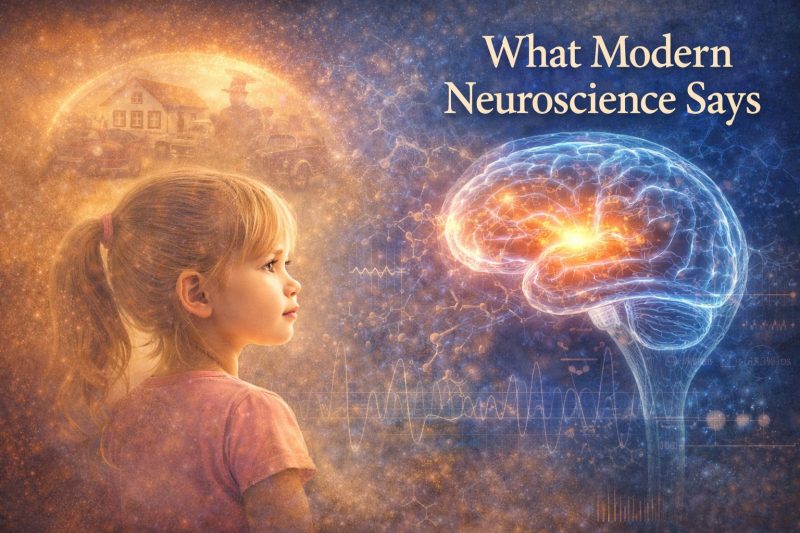
While the research exists and is archived, mainstream neuroscience does not accept reincarnation as a proven explanation. they are still wuestioning why do children remember past lives?
From a neurological standpoint, memory is understood as a function of the brain. It depends on:
- The hippocampus (memory consolidation)
- The prefrontal cortex (source monitoring and evaluation)
- Neural networks shaped by experience
Young children are in a unique developmental phase:
- The imagination is highly active
- The prefrontal cortex is not fully mature
- Source monitoring (distinguishing imagination from lived experience) is limited
Neuroscientists suggest that childhood past-life memories may result from:
Source monitoring errors – Confusing imagination, dreams, stories, or overheard information with personal memory.
Cryptomnesia – Forgotten exposure to information later recalled as original memory.
Confabulation – The brain naturally filling gaps in memory to create coherent narratives.
Cultural reinforcement – In cultures where reincarnation is widely accepted, children may interpret imaginative experiences within that framework.
Research in developmental psychology shows that memory is reconstructive, not a perfect recording. Emotional intensity strengthens neural pathways, which may explain why some children appear deeply convinced.
Importantly, neuroscience currently finds no biological mechanism for memory transfer after death.
The Birthmark Question
One of the most controversial aspects of the research into whether do children remember past lives involves birthmarks and congenital defects.
In roughly 30–35% of cases studied by Stevenson, children reportedly had birthmarks or physical anomalies that appeared to correspond with injuries documented in deceased individuals’ medical records. These were sometimes described as matching in location and, in certain cases, even in shape.
For those asking, do children remember past lives, these birthmark cases are often presented as some of the most compelling evidence.
However, skeptics raise important concerns:
- Retrospective matching can be subjective
- Only the most striking correlations tend to receive attention
- There is no known physiological pathway connecting one body to another
From a medical standpoint, embryology explains birthmarks and congenital defects as natural developmental variations occurring during fetal growth.
At present, there is no established biological mechanism that supports the transfer of physical traits from one life to another.
Yet even critics acknowledge that some cases are unusual enough to warrant careful examination. Whether these findings point toward reincarnation or simply highlight gaps in our current understanding remains an open question.
Why the Debate Continues
If neuroscience rejects reincarnation as unproven, why does the research persist? the question remains unanswered do children remember past lives. Or is this a question that science can’t explain because it looking for proof in the wrong ways?
Because consciousness itself remains one of science’s greatest mysteries.
Despite advances in brain imaging and cognitive science, there is still no complete explanation for:
- How subjective experience arises
- Why consciousness exists at all
- Whether awareness is entirely confined to brain tissue
Researchers in consciousness studies continue exploring models ranging from strictly materialist frameworks to broader hypotheses involving quantum theory or non-local consciousness. None of these theories have reached consensus.
So when people ask, “Do children remember past lives?” the honest scientific answer is:
There is documented research.
There are neurological explanations.
There is no definitive proof either way.
The Emotional Dimension
Beyond the data, the question do children remember past lives carries real emotional weight.
Some families report that children:
- Recognize deceased relatives
- Display phobias linked to alleged past deaths
- Provide names and details that are later verified
For grieving families, these stories can feel deeply comforting. The possibility that a soul might return, or that love might continue in some form, touches something tender and hopeful.
For skeptics, the same stories prompt caution and critical examination. Emotional intensity does not automatically confirm external truth.
When exploring whether children remember past lives, it is important not to leap too quickly toward belief or dismissal. Experiences like these deserve both compassion and discernment.
Holding space for mystery while remaining thoughtful allows us to honour both science and spirit, without abandoning either.
Curiosity without certainty allows space for both compassion and critical thinking.
When the Personal Evidence Becomes Impossible to Ignore
While scientific research and neuroscience offer valuable frameworks for exploring whether do children remember past lives, they do not fully explain why these memories feel so vivid, emotional, or personally meaningful to the children experiencing them.

Spiritual Perspective of Children Remembering Past Lives
From a spiritual perspective, consciousness is not always viewed as limited to a single lifetime. Many traditions suggest that the soul carries experiences, emotional impressions, and awareness beyond physical death, an idea explored further in our guide on what happens after death from a medium’s perspective.
Children, particularly in early childhood, may be more open to these subtle layers of awareness. Before social conditioning fully shapes perception, children often exist in a state of intuitive openness, where imagination, emotion, and inner knowing flow freely. This may help explain why questions like do children remember past lives arise most often between the ages of two and five and fades between the ages of six and seven.
Rather than dismissing these experiences outright, many spiritual traditions encourage gentle curiosity. Whether interpreted as imagination, subconscious memory, or soul continuity, these moments often appear during a child’s most intuitive stage, a time when inner and outer realities are not yet rigidly defined.
Parents Hearing About Past Lives
For parents, hearing a child speak about past lives can feel confusing or unsettling. Spiritual traditions generally advise a calm, grounded response, listening without reinforcing fear, correcting the story, or encouraging fantasy. The goal is not to prove whether a memory is real, but to support emotional safety and trust.
For sensitives and spiritual seekers, these accounts often resonate on a deeper level. Not as proof but as recognition. They echo long-held beliefs that consciousness is layered, expansive, and not confined to linear time.
Whether approached through research, spirituality, or personal reflection, the question do children remember past lives invites something larger, a reminder that human awareness may be far more complex than we currently understand.While neuroscience offers developmental explanations, and research archives document structured case studies, there is another dimension to this conversation, lived experience.
A Mother’s Story of Loss, Love, and Soul Connection
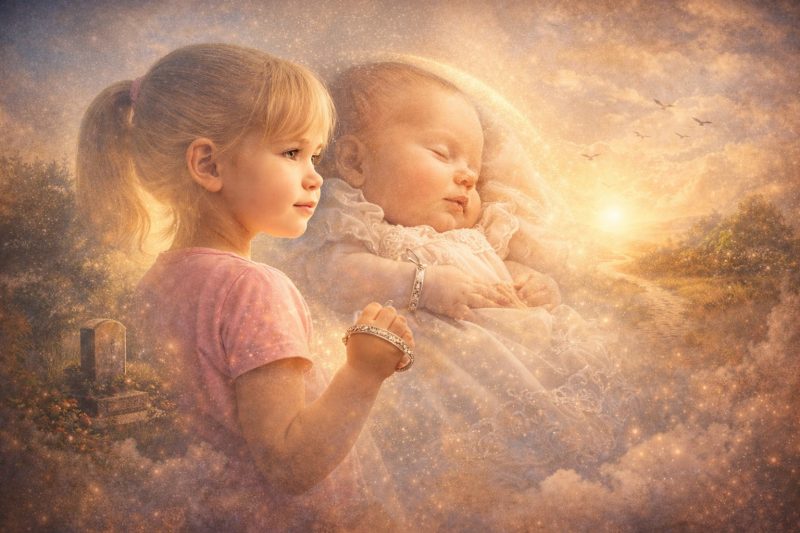
In my own family, there was a story that never left us.
A woman once came to my mum for a reading. During the session, Mum told her she had a daughter in spirit. The woman confirmed this. Her first daughter had died suddenly as an infant, passed away in her sleep, a cot death. The grief lingered for years. It was so heavy that eventually the family moved to another town, hoping distance might soften the pain.
A few years later, they had another daughter.
When the second daughter was four and half years old, the family was driving back to their former town to visit relatives. As they passed the cemetery where the first child had been buried, the little girl suddenly spoke.
“Mummy, do you remember when you put me in the ground over there and cried and cried because you didn’t think I’d come back? Well, I did.”
Her mother was stunned. She tried to dismiss it gently.
“I never put you in the ground. Where did you hear that?”
The child continued calmly.
“Yes you did, Mummy. I had a white dress on, my silver bracelet and my teddy next to me. Don’t you remember?”
The detail was accurate. The bracelet. The dress. The teddy bear.
Things the child had never been told.
The question the lady asked my mum was do children remember past lives and was this possible that the same spirit of the child they had lost had come back to them?
My mum shared with this woman that she believed reincarnation was possible, and that perhaps her daughter had indeed returned and her daughter was remembering her past life.
Now, is this scientific proof?
No.
But it is a lived experience. And stories like this are echoed in research archives around the world.
Stories like this sometimes arise during private readings, when questions about continuity, connection, and unfinished bonds surface gently. If you’re navigating similar experiences, you may find reassurance in our article on signs a lost loved one is near, which explores how connection can continue in different forms.
Holding Both Science and Spirit
When people ask, do children remember past lives, they are often not just asking a scientific question. They are asking something deeper:
- Can love return?
- Does the soul continue?
- Is consciousness bigger than one lifetime?
Science currently says memory requires a brain.
Spiritual traditions across cultures say the soul continues.
Research documents thousands of cases that sit somewhere in between.
The truth is, we do not yet fully understand consciousness.
As we explore questions like do children remember past lives, it also becomes important to develop discernment and inner awareness. Strengthening your intuitive perception helps you approach spiritual experiences thoughtfully rather than reactively, which is why learning about psychic development can be so valuable.
And sometimes the most honest position is not certainty, but openness.
You do not have to abandon discernment to remain spiritually curious.
You do not have to dismiss mystery to respect science.
Both can coexist.
A Balanced Perspective of Children Remembering Past Lives
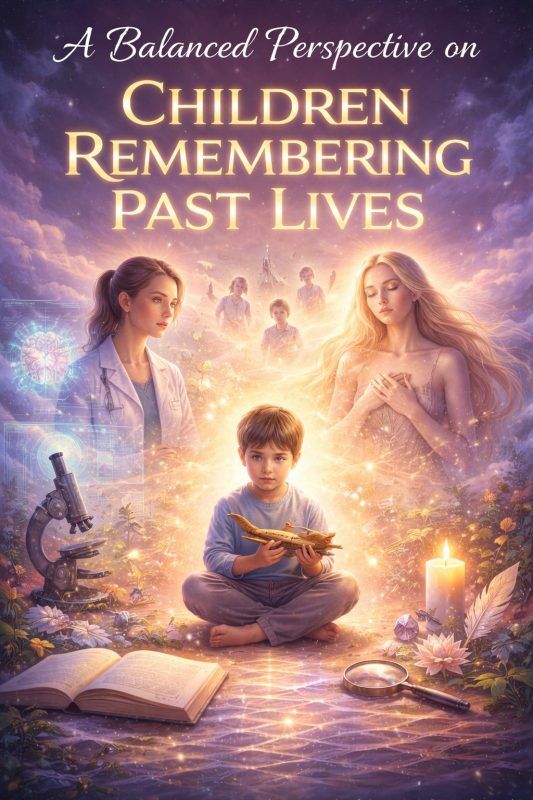
Here is what can be stated with clarity:
- Thousands of cases have been documented by credentialed researchers.
- The research is archived and publicly accessible.
- Mainstream science does not consider reincarnation proven.
- Developmental psychology offers plausible alternative explanations.
- Consciousness research remains incomplete.
The question is not settled. It remains open, examined, debated, and emotionally charged.
Perhaps the most grounded approach is this:
Remain curious.
Remain thoughtful.
Remain open without abandoning discernment.
Help Us to Help You
If this article has helped you reflect, find reassurance, or feel a little less alone, you’re very welcome to stay and explore freely.
And if you feel called, a small donation helps us keep 6th Sense Connection ad-free and accessible to those seeking guidance, comfort, and clarity.
Frequently Asked Questions: Do Chidlren Remember Past lives?
Because this topic raises both scientific and spiritual questions, here are some of the most common things people ask when exploring whether children remember past lives.
Do children remember past lives according to science?
Mainstream science does not answer the question do children remember past lives. Neuroscience explains these experiences through early childhood development, imagination, memory reconstruction, and source-monitoring errors. However, researchers such as Dr. Ian Stevenson and Dr. Jim Tucker have documented thousands of cases that they argue are difficult to explain through conventional psychology alone.
At what age do children claim to remember past lives?
In documented research cases, children typically begin speaking about past-life memories between ages 2 and 4. These memories often fade between ages 6 and 8. Developmental psychology notes that this age range is also when imagination is strongest and critical reasoning is still forming.
Is there scientific evidence of reincarnation?
There is no widely accepted scientific proof of reincarnation. While thousands of cases have been documented and archived at the University of Virginia’s Division of Perceptual Studies, mainstream science does not consider reincarnation a proven explanation. The research is described as suggestive but not conclusive.
How does neuroscience explain children remembering past lives?
Neuroscience suggests that childhood memory is highly reconstructive. Young children may confuse imagination, dreams, overheard conversations, or media exposure with personal memory. The developing brain is still forming its ability to distinguish internal imagery from lived experience.
What do spiritual traditions say about children remembering past lives?
Many spiritual traditions, including Hinduism, Buddhism, and various metaphysical teachings, view reincarnation as a natural part of the soul’s journey. From this perspective, children remembering past lives is not unusual but reflects the continuation of consciousness beyond one lifetime.
Why do some children have birthmarks linked to past-life injuries?
Researcher Dr. Ian Stevenson documented cases where birthmarks appeared to correspond to fatal wounds of deceased individuals. However, modern medicine explains birthmarks as natural developmental variations. There is currently no established biological mechanism that connects birthmarks to previous lives.
Could past-life memories be spiritual rather than psychological?
From a spiritual perspective, some believe consciousness is not limited to the physical brain and may continue after death. While science has not confirmed this view, many people interpret childhood past-life memories as evidence of the soul’s continuity. The question remains open to interpretation.
Should parents be concerned if their child talks about a past life?
Most childhood past-life claims fade naturally by age 6 or 7 and do not indicate psychological distress. Experts suggest responding calmly and without reinforcement or dismissal. If a child shows anxiety or fear, consulting a child development professional may be helpful.
Continue Exploring the Bigger Questions
If you’re exploring whether children remember past lives, you may also find these guides helpful:
What Happens After Death? A Medium’s Perspective
Explore the spiritual understanding of consciousness after death, near-death experiences, and how connection may continue beyond the physical body.
16 Signs a Lost Loved One Is Near
If your curiosity about reincarnation connects to grief or ongoing connection, this guide explores common spiritual signs reported by families.
How to Strengthen Your Intuition
If consciousness is deeper than the brain alone, learning to trust your inner knowing becomes even more important. This guide walks you through developing intuitive awareness safely and groundedly.
Psychic Development for Beginners
Understand how perception, sensitivity, and spiritual awareness evolve, and how to approach them with discernment and balance.
Can Oracle Cards Predict the Future?
A grounded exploration of guidance, free will, and how spiritual tools actually work.
Final Reflection; Do Children Remember Past Lives?
Science says memory depends on the brain.
Research archives say thousands of cases exist.
Consciousness research says we still have unanswered questions.
What this subject ultimately reveals is not certainty, but mystery.
And sometimes mystery is not something to solve immediately. It is something to approach with intelligence, compassion, and humility.
