

If you’ve been wondering how to work with your shadow self, you’re not alone. Picture this: you’re on a journey of growth, doing all the “right” things, positive thinking, affirmations, staying high vibe… and yet something keeps pulling you back.
That something?
Your shadow. Not here to sabotage you… But to complete you. And that’s what this guide will show you.
This guide will show you exactly how to work with your shadow self in a grounded, empowering, and practical way, so you can stop fighting yourself and start stepping into your full power.
What is the Shadow Self And Why It’s Important?

Your shadow self is the part of you that holds everything you’ve pushed away, traits, emotions, desires, and experiences that felt too uncomfortable, unsafe, or unacceptable to express. Psychologist Carl Jung described it as the hidden side of your personality, the parts of yourself you’ve learned to hide
But here’s the truth most people miss:
Your shadow doesn’t just hold your wounds…
It also holds your power.
For a deeper exploration of what the shadow self is start here.
The Truth About Your Shadow: It’s Not the Enemy
Most people think shadow work is about “fixing” what’s wrong with them. It’s not.
It’s about reclaiming what was lost, hidden, or silenced. Inside your shadow you’ll find:
- Suppressed emotions (anger, jealousy, fear)
- Hidden strengths (confidence, creativity, boundaries)
- Forgotten parts of your identity
- Unexpressed desires and truth
This is why shadow work can feel intense at first… but also incredibly freeing once you begin
The Hidden Dimensions of Your Personality
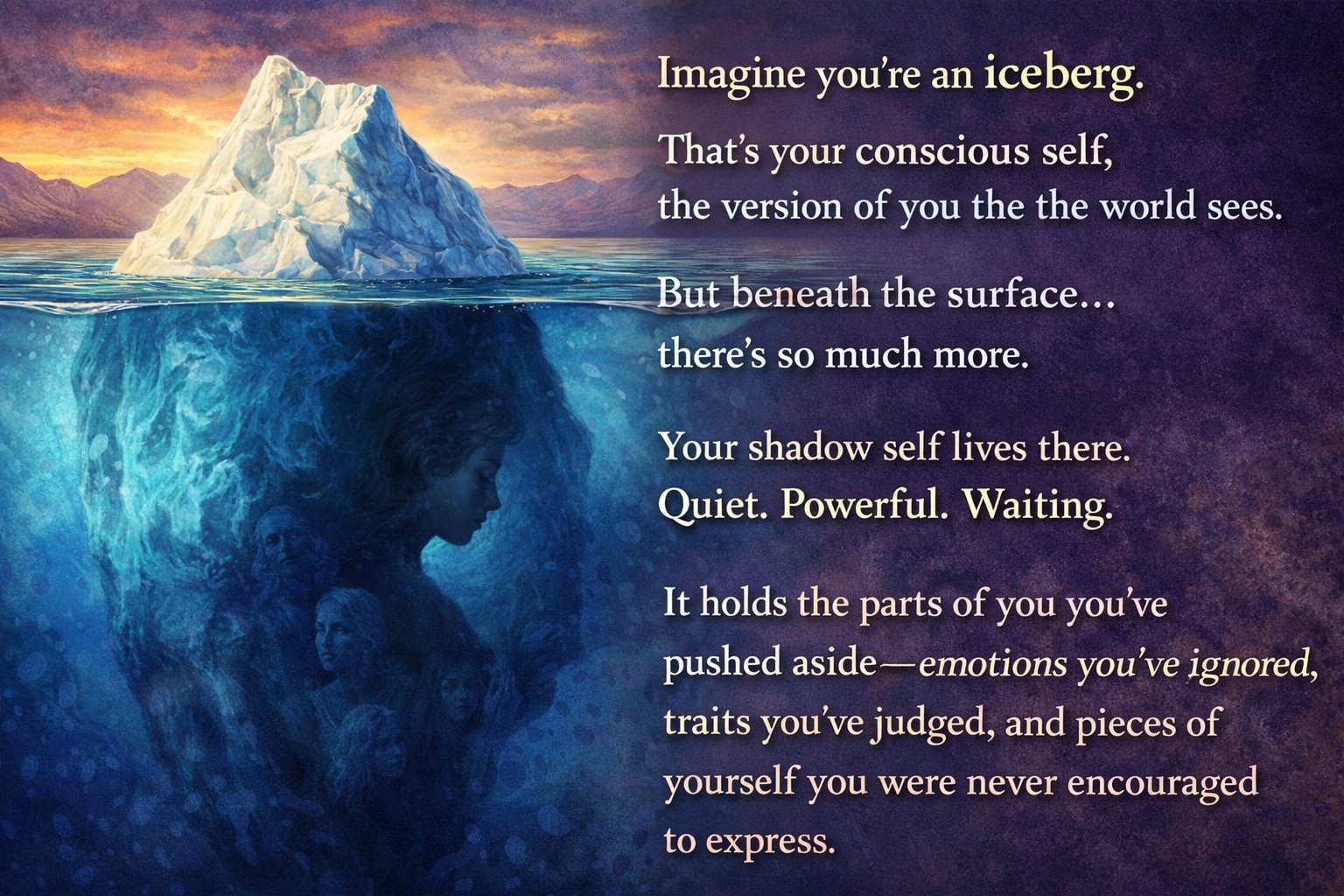
Imagine you’re an iceberg.
The part above the surface?
That’s your conscious self, the version of you the world sees.
But beneath the surface… there’s so much more.
Your shadow self lives there- quiet. Powerful, waiting.
It holds the parts of you you’ve pushed aside, emotions you’ve ignored, traits you’ve judged- and pieces of yourself you were never encouraged to express.
But here’s the shift most people don’t realise:
Your shadow doesn’t just hold what you fear…It holds what you’ve yet to become.
Note: If you find yourself avoiding deeper emotions, rather than processing them, you may also want to explore spiritual bypassing, a common pattern where we use positivity to skip over necssary healing work.
The “Closet” You’ve Been Avoiding
Think of your shadow like a closet you quickly shut before anyone notices what’s inside.
Out of sight. Out of mind.
But what if you opened it?
What if, beheath the emotional clutter, you found:
- A passion you once loved but had to hide
- A voice you were afraid to use
- A version of you that felt too bold, or too different for the world around you
Shadow work isn’t about fixing what’s broken. It’s about rediscovering what was hidden.
What’s Really Hiding in Your Shadow?
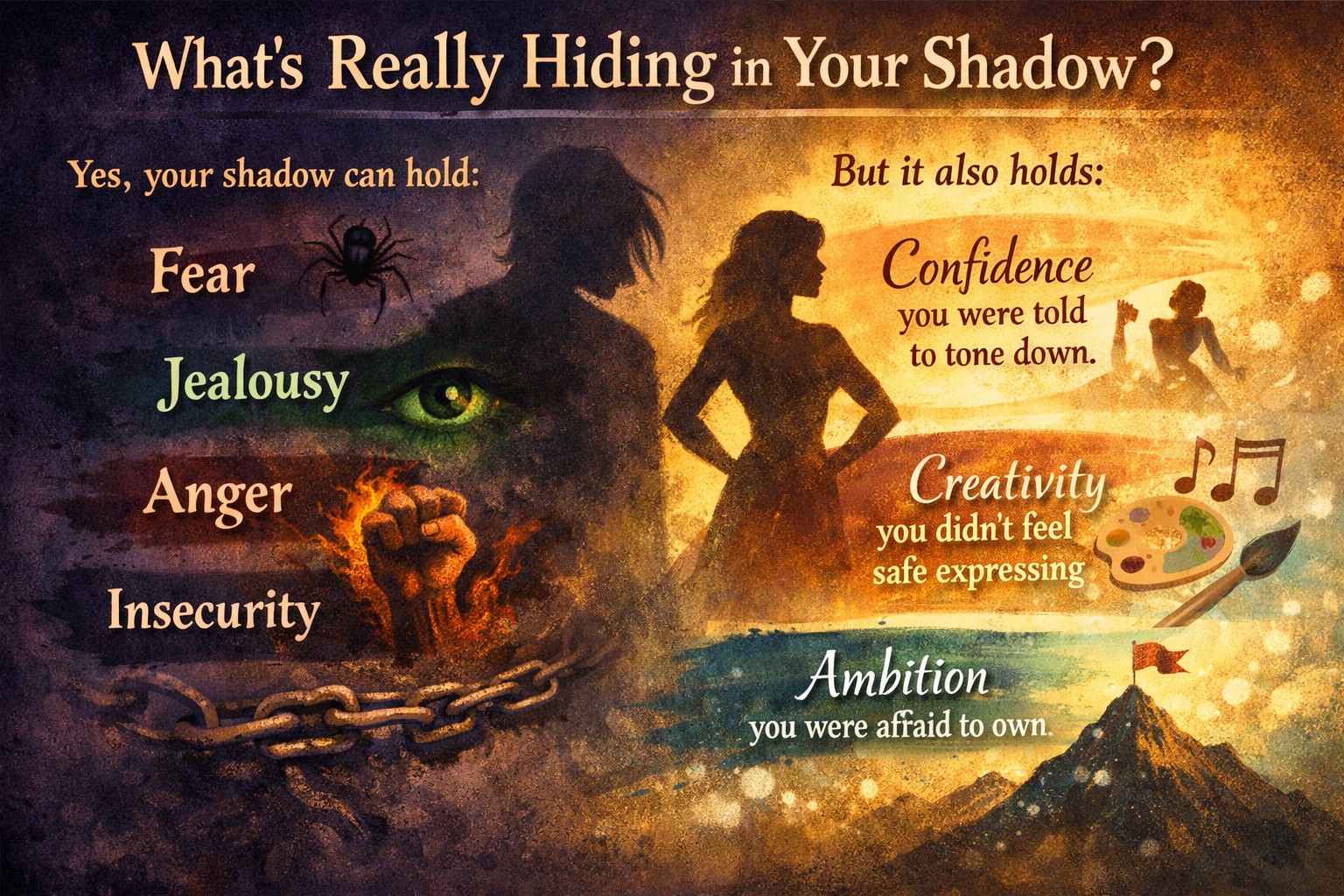
Yes, your shadow can hold:
- Fear
- Jealousy
- Anger
- Insecurity
Yes, your shadow can hold wounds-but that’s only half the story. It also holds:
- Confidence you were told to tone down
- Creativity you didn’t feel safe expressing
- Ambition you were afraid to own
This is why when you work with your shadow it can feel uncomfortable. You’re not just meeting your wounds—you’re meeting your potential. And that can feel both terrifying and thrilling.”
Signs Your Shadow Self Is Trying to Get Your Attention
Your shadow doesn’t stay hidden forever. It shows up in patterns.
You might notice:
- You feel triggered by certain people or situations
- You overreact and don’t know why
- You suppress emotions, then they explode later
- You people-please or struggle with boundaries
- You judge others harshly (often reflecting something within)
These aren’t flaws. They’re invitations.
If you want to explore what’s currently hidden in your energy right now? Try this free shadow work pick-a-card reading.
Why Working With Your Shadow Changes Everything
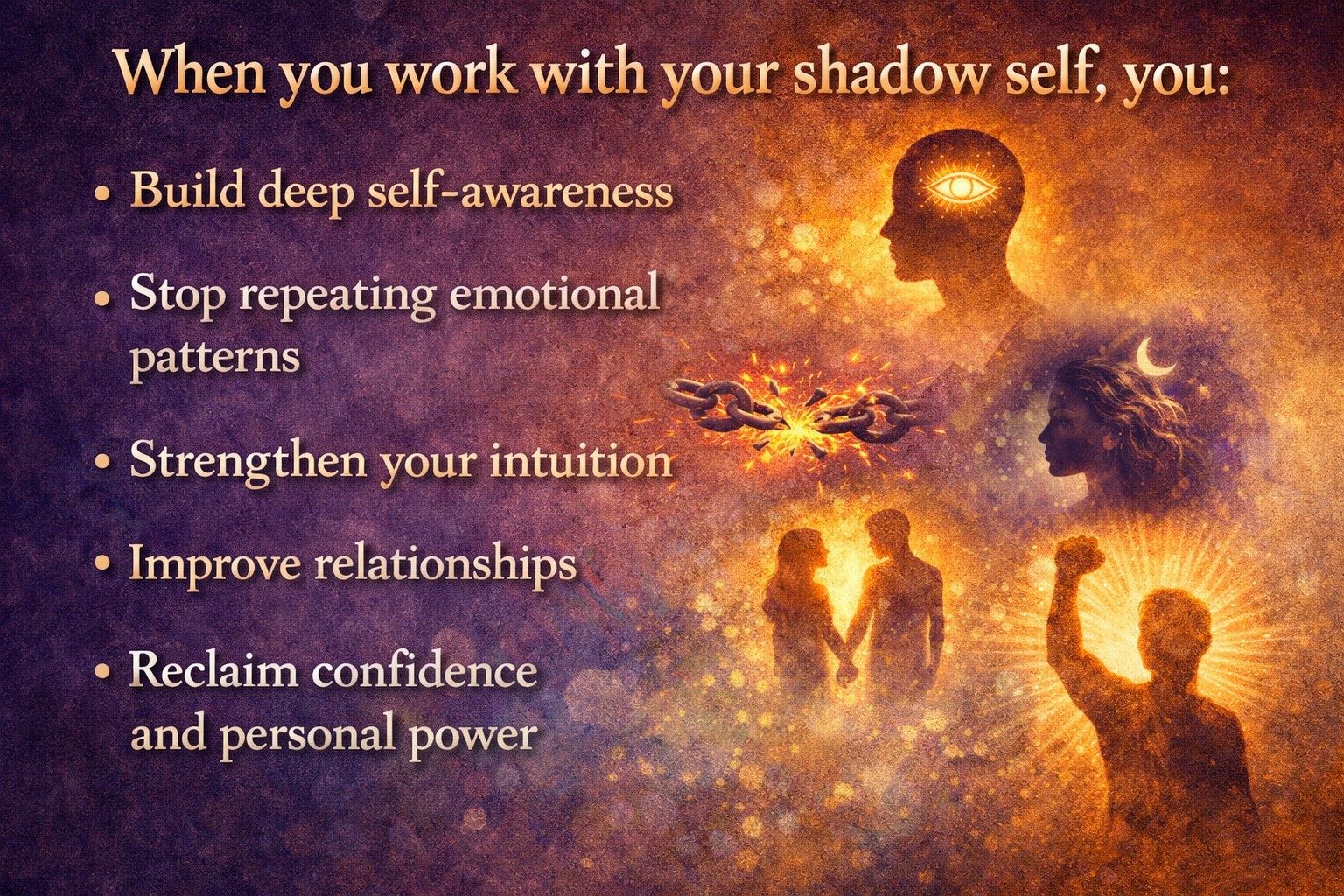
When you work with your shadow self, you:
- Build deep self-awareness
- Stop repeating emotional patterns
- Strengthen your intuition
- Improve relationships
- Reclaim confidence and personal power
This isn’t about becoming “better.” It’s about becoming whole.
How to Work With Your Shadow Self (Step-by-Step Guide)
1. Get Curious Instead of Critical
Start noticing your reactions without judgment. When something triggers you, pause instead of react. Your shadow is showing you something worth exploring.
To truely transform we need to Make friends with your shadow—it’s where your power lies When we stop fighting it, it becomes our ally and protector.
Try asking yourself:
- Why did this trigger me?
- What memory or experience does this remind me of?
- When have I felt this before?
Awareness is the first step to transformation.
2. Use Your Triggers as Clues
What bothers you in others often mirrors something within yourself.
For example:
- Judging someone as “too confident” → suppressed confidence
- Feeling irritated by attention-seeking → desire to be seen
Your shadow speaks through your reactions.
3. Journal What You Normally Avoid
Shadow work becomes truly powerful when you make the unconscious conscious—when you name what you’ve been hiding from yourself
Try prompts like:
- What part of myself do I hide the most?
- What emotion do I avoid feeling?
- What do I secretly want but don’t allow?
Write honestly. No filters.
4. Sit With the Emotion (Instead of Escaping It)
Instead of pushing emotions away, sit with them. Ask: What is this feeling trying to show me? Your shadow isn’t here to hurt you—it’s here to be heard. There’s a difference.
Ask: What is this feeling trying to show me?
Your shadow isn’t trying to hurt you—it’s trying to be heard.
5. Reclaim the Hidden Gift
Anger → the power to set boundaries
Jealousy → awareness of what you truly desire
Fear → your intuition protecting you
Your job isn’t to eliminate the emotion, it’s to understand and redirect it.
Practical Shadow Work Techniques to Go Deeper
Once you start recognising your shadow, the next step is working with it consistently.
Here are simple but powerful ways to go deeper:
Journaling for Self-Reflection
Once you’ve noticed a trigger, take time to write. Use prompts like:
- What am I really afraid of in this situation ?
- What would I never allow myself to say or do?
- What part of myself am I rejecting?
Once you identify a trigger, trace it backward. Where did this pattern start? Who taught you to feel shame about this emotion or desire? Naming the origin is key to releasing it.
See Through Another Perspective
If someone triggers you, pause and consider their viewpoint—not to excuse their behavior, but to understand what’s happening beneath your reaction. Often, we judge harshly because we’re defending against something within ourselves. This builds empathy and helps you respond instead of react.
Practice Speaking Your Truth
“If you tend to hold things in, start expressing yourself in calm, honest ways—first maybe in writing, then in safe relationships. Speaking your truth doesn’t mean unfiltered honesty with everyone; it means honoring your voice. This is how you work with your shadow and how it transforms how you show up in the world.
When Your Shadow Is Actually Protecting You

Not every shadow reaction needs ‘fixing.’ Sometimes your shadow isn’t a problem—it’s protective wisdom trying to reach you.
Sometimes… it’s something to understand.
Your shadow steps forward at critical moments:
- When your boundaries are being violated
- When something doesn’t feel right ( your intuition flagging danger)
- When you’re being asked to shrink yourself to keep others comfortable
That sudden reaction? That fire? That edge?
It’s not a flaw. It can be protection. It can be wisdom.
The key is learning the difference between reacting unconsciously…
and responding with awareness.
This is where true growth happens.
You’re no longer suppressing your shadow…
and you’re no longer being controlled by it.
You’re working with it.
Even those moments where you feel “out of character” can carry wisdom.
Especially for empaths and lightworkers, this is important:
You are not meant to be soft all the time. You are meant to be whole—which sometimes means being fierce.
And sometimes wholeness includes:
- Saying no
- Speaking up
- Standing firm
Your shadow isn’t here to sabotage you.
It’s here to support you, when you learn how to listen.
Shadow Work and Emotional Intelligence

Working with your shadow doesn’t just help you understand yourself…
It changes how you handle everything.
True emotional intelligence isn’t about staying calm all the time—it’s about understanding what you feel and why, even when it’s uncomfortable or intense.
And your shadow holds the key to that.
The emotions you suppress don’t vanish—they leak out unconsciously in your reactions, decisions, and relationships. They’re always working beneath the surface, influencing your life.
When you begin working with your shadow, you start to:
- Recognise your triggers before reacting, giving yourself a choice
- You understand why you feel what you feel, not just that you feel it
- You repsond intention instead of impulse
- You build stronger relationships rooted in honesty, rather than people-pleasing
How Your Shadow Shows Up in Everyday Life
When you work with your shadow self, you begin to notice patterns. Your shadow rarely announces itself dramatically. Instead, it whispers through familiar, everyday moments:
- Feeling defensive when receiving criticism → often linked to hidden insecurity
- Struggling to express anger → learned suppression of emotions
- Over-giving or people-pleasing → fear of rejection or abandonment
These reactions aren’t random, these are signals that it’s time to work with your shadow.
They’re patterns.
And when you start recognising them, you stop being controlled by them.
That’s where your power returns.
Shadow Work With Oracle Cards

One of the most powerful ways to work with your shadow is through reflection tools like Oracle cards. If you’re new to Oracle cards, learn all about them here.
Try this:
Ask: “What is this situation trying to show me about myself, that I have been avoiding?”
A simple 5-card spread can reveal:
- The root of the trigger – where does this come from?
- The hidden emotion-What am I really feeling beneath the surface?
- The lesson-What does my shadow want me to learn?
- The spiritual impact- How does this pattern affect my growth?
- The real-world shift-What concrete action will intergrate this awareness?
The Truth Most People Avoid
Your shadow will keep showing up—louder each time—until you stop rejecting it. Not to punish you, but to bring you back into alignment with who you really are.
You are not just your light. You are your depth, your contrast, your complexity… and your truth.
Deepen Your Practice (Next Steps)
Tools & Support for Your Shadow Work Journey

You don’t have to work with your shadow self alone.
If you’re ready to go a little deeper, here are some gentle ways to support your journey:
- Spiritual Bypassing – understand when positivity may be masking deeper healing
- Shadow Self Meaning – What is the shadow self
- How To Make The Most of your Shadow self
- Am I on the Right Path? (article + free pick-a-card reading) – gain clarity and reconnect with your direction
- Free Tarot Readings & Daily Messages from Spirit – ongoing guidance and reflection
If you feel ready for something more personal, you can also connect with a trusted psychic for deeper insight:
Click here for a personal reading
Take your time. Your path unfolds as you’re ready.
Frequently Asked Questions About How to Work With Your Shadow Self
Still wondering how to work with your shadow self? These common questions will help you understand the process more clearly and take your next step with confidence.
What is shadow work and how do you work with yourself?
Shadow work is the process of exploring and integrating the hidden parts of your personality—the emotions, patterns, and beliefs you’ve pushed away. It’s the practical method that helps you understand why you react the way you do.
How do I start working with my shadow self safely?
Begin with awareness and gentle self-reflection. Notice your triggers without judgment, write down what comes up, and allow emotions to surface in their own time. Moving slowly builds trust with yourself—and trust is essential when you work with your shadow self.
Can shadow work feel overwhelming?
It can feel uncomfortable, when you start to work with your shadow, but it shouldn’t feel overwhelming. The difference? Approach it with curiosity rather than judgment. You’re not excavating your entire psyche at once—small, consistent awareness leads to transformation.
What real benefits does shadow work actually bring?
You develop genuine self-awareness instead of just positive thinking. Your emotions become information rather than problems. Old patterns dissolve. Relationships improve because you’re no longer performing. Most importantly: you stop fragmenting yourself and start showing up whole.
How long does it take to learn how to work with your shadow self?
There’s no finish line. Shadow work is an ongoing journey—not a problem to solve, but a practice to deepen over time. The more consistently you reflect, the more natural and powerful it becomes.
Final Thoughts: Your Shadow Is Your Power
The moment you stop fighting your shadow, you stop fighting yourself.
And that’s where everything changes.
Until next time, love, light and chocolate
