Am I a Witch? Am I Probably a Witch… or Just Intuitive?
When intuition is misunderstood, people reach for myths instead of recognising awareness and honesty for what they are. Some people practise spell work, others don’t, and both are valid. What matters isn’t the label you choose, but what feels aligned, ethical, and true to your own path.


At some point on an intuitive or spiritual path, many people quietly ask the same question:
Am I a witch?
Sometimes it shows up a little differently, am I witch, am I probably a witch, or could I be a witch and not realise it? Often, this question isn’t about magic or labels at all. It’s about noticing that you sense things others don’t, that people react to your insight, or that you’ve been teased for “knowing things” your whole life.
If you’ve ever wondered am I a witch or am I just intuitive, you’re not alone. For many people, this curiosity is really about understanding their awareness, without fear, fantasy, or pressure to be anything they’re not.
This article explores where that question comes from, why intuition is so often misunderstood, and how to gently make sense of it, whether or not you ever choose a label.
When Other People Decide You’re a Witch First
In my earlier years, people often joked that I was a witch because I always seemed to know things. I’d sense outcomes before they happened or say something casually that later turned out to be true.
Eventually, someone bought me a witch’s broom as a joke.
I took it exactly as it was meant, good-natured and light-hearted. I laughed, accepted it, and didn’t give it much thought. I never accepted the title, but I never rejected it either. I simply didn’t need it.
The broom eventually became a piece of wall art in my reading room. It wasn’t there as a symbol of anything mystical, it was simply a reminder of how easily intuition gets labelled by others. If you’re wondering Am I a witch take the quiz and find out.
Months later, a client noticed it and, completely serious, asked if I could fly it.
I replied, “Only on Halloween.”
He believed me.

That moment stayed with me because it perfectly captured how intuition is often misunderstood. When insight feels unfamiliar, people reach for myth rather than recognising awareness, perception, and honesty for what they are.
Some people do practise spell work, and that’s perfectly okay. Others don’t, and that’s equally valid. What works for you, what feels aligned, ethical, and true to your own path, is right for you. Intuition doesn’t come with rules, and it doesn’t need to look the same for everyone.
When Intuition Gets Taken Too Literally
That wasn’t the only time people brought their own ideas into a reading.
Another client once remembered seeing that broom years earlier and genuinely believed it meant I was doing something magical behind the scenes. What fascinated me wasn’t the belief itself, it was how quickly people reach for supernatural explanations when intuition feels unfamiliar. I kept it there for fun and it sometimes sparked deep conversations.
Intuition can make people uncomfortable because it’s quiet, accurate, and doesn’t dress itself up. I have the reputation of telling it like it is, with compassion and a little humour to soften the revelations of why people keep making the same mistakes and are attracted to the same kind of partner. I feel it helps them grow through life instead of just going through life.
So when people ask “Am I probably a witch?”, what they’re often responding to is how others react to their insight, not anything they’re actively doing.
When Guidance Gets Blamed As Witchcraft

Another story stays with me for a different reason.
In the 1980s, I gave a reading to a man who was unsettled and constantly chasing women without commitment. During the session, I told him something he didn’t want to hear: unless he stopped spreading himself thin and stayed true to one woman, his life would never fully settle. He needed one steady, grounded partnership to keep him on track.
He didn’t like that message.
Just last year in 2025, a man contacted me on Facebook. I had no idea who he was until he reminded me of that reading. His life hadn’t turned out the way he wanted, and half-serious, he asked if I had put a spell on him some sort of curse. I don’t do curses, but I know about them.
I told him plainly:
“No. You did that yourself. You didn’t mend your ways. And if you weren’t willing to be faithful or grounded, how could you expect any woman to stay true and become your life partner?”
That wasn’t witchcraft.
That was his free will and he was living with the consequences he’d brought upon himself.
Sometimes it’s easier to believe something was done to you than to accept you were warned and chose not to listen. The future is flexible and dependant on the choices you make.
There’s one more reflection I’ve always shared with humour rather than belief.
I’ve been allergic to rye for as long as I can remember and have always been gluten intolerant. I’ve also noticed an irrational discomfort with anything tight around my neck, like polo neck sweaters. And I’ve never been comfortable being too close to fire, something in my body reacts as if it’s a warning long before my mind has time to catch up.
Over the years, I’ve joked that perhaps, in a previous life, I was a helpful, wise village woman, someone people came to for insight or healing, and that maybe it didn’t end well. Perhaps it involved mouldy bread, fire, or being labelled a witch simply for being perceptive and useful.
I don’t present that as belief or fact.
I hold it as metaphor.
Because what is true is that many intuitive people feel cautious about labels, visibility, or being misunderstood. Not because they fear who they are, but because they instinctively understand that wisdom has often been mislabelled.
So when people call me a witch, even jokingly, something in me pauses.
Not because I reject all the ways I help people. It’s because I recognise how easily a psychic reader becomes a bad witch in other people’s stories. That same intuitive is held in high esteem when something good that they predicted happens.
So… Am I a Witch or Am I Probably a Witch?

If you’re asking “Am I a witch?”, the honest answer for most people is:
Probably not in the dramatic sense — but yes, you’re likely intuitive.
People who search am I probably a witch are often:
- highly perceptive
- emotionally and energetically aware
- good at pattern recognition
- comfortable with symbolism and inner guidance
Some people reclaim the word witch.
Some prefer intuitive, empathic, or wise.
Some laugh and move on.
All are valid.
The label matters far less than understanding how your intuition works, and how to live comfortably with it. Self-doubt often arises when rigid, fear-based beliefs are applied to something that is naturally intuitive and personal.
Three Gentle Quizzes to Explore This Further
If this question keeps coming up for you, we have three short, reflective quizzes designed to help you explore what applies to you, without labels, pressure, or dramatic conclusions.
- Am I a Witch Quiz? — a light, curiosity-led quiz exploring intuition, awareness, and sensitivity
- What Type of Witch Are You? Are you a Green Witch, Cosmic Witch, Shadow Witch, or something uniquely your own?
- Are you a Witch a Psychic or Both? — a quiz that looks at how your intuition shows up and how you naturally process insight
You’re welcome to take the free quizzes if you’re curious. Many people find that seeing their intuition from more than one angle brings clarity rather than confusion.
If you’ve ever been teased for “knowing things,” labelled before choosing your own words, or caught yourself thinking am I witch… probably?, these quizzes offer a calm, supportive way to understand your intuition, without fear, fantasy, or pressure.
Free Support, Gentle Exploration, and Paying It Forward
If this article has helped you feel calmer, clearer, or more at ease with your intuition, you’re not meant to walk this path alone, and there’s no pressure to go any further than feels right.
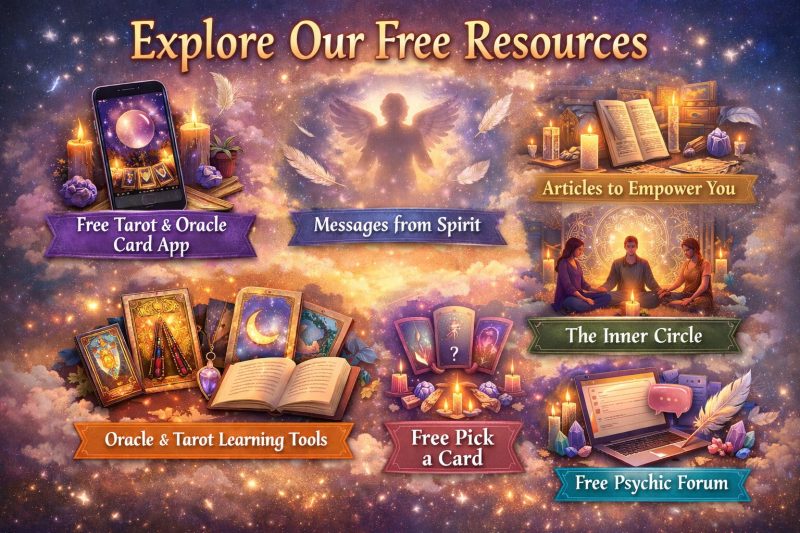
We offer a range of free resources designed to support curiosity, comfort, and self-understanding:
- Free Inner Circle — a welcoming space to explore intuition, ask questions, and feel less alone
- Free Tarot Readings — gentle guidance offered as reflection, not prediction
- Messages from Spirit — calm, supportive insights meant to reassure rather than alarm
- Pick-a-Card Readings — simple, grounding ways to check in with yourself and your intuition
Everything is designed to be safe, pressure-free, and grounded, no fear, no rigid beliefs, and no labels you’re expected to accept.
Paying It Forward (Only If It Feels Right)
If this page has helped you, even in a small way, and you’d like to pay that support forward, you’re warmly invited to visit our shop and see if any of the offerings resonate with you.
There’s no obligation and no expectation.
Simply explore, trust what feels right, and leave what doesn’t.
Supporting the shop helps us keep these free resources available for others who may be asking the same quiet questions you once asked.
Frequently Asked Questions Am I A Witch
Am I a witch?
Most people who ask “Am I a witch?” are not looking for a literal identity. They’re usually intuitive, perceptive, or emotionally aware and trying to understand why they notice things others miss. The word witch is often used loosely to describe intuition rather than actual practice.
Am I probably a witch if people say I “know things”?
Not necessarily. Being told you “know things” often points to strong intuition, pattern recognition, or emotional intelligence. Many intuitive people are labelled witchy simply because their awareness makes others uncomfortable or curious.
Am I a witch or a psychic and is there a difference?
Some people use the word witch to describe intuition connected to nature, symbolism, or inner knowing, while psychic is often associated with perception, insight, or sensing information beyond words. The Am I a Witch or a Psychic? quiz helps explore how your intuition actually works, rather than forcing a label.
What is the Am I a Witch quiz for?
The Am I a Witch quiz is a gentle, reflective tool designed to help you explore intuition, sensitivity, and awareness. It’s not about diagnosing or labelling you, it’s about understanding how your inner guidance shows up in everyday life.
Should I be afraid if others call me a witch?
No. Being called a witch is often a reflection of how others experience your intuition, honesty, or awareness, not something you need to fear. Many people use the word casually to describe someone who notices patterns, senses emotions, or “knows things” instinctively. You’re not required to accept the label, and it doesn’t mean anything is wrong with you. What matters most is how you understand and feel about your intuition, not the language others choose.
Are witches evil or do the work of the devil?
No. Witches are not evil and do not do the work of the devil. This belief comes mainly from historical fear, folklore, and religious misunderstanding. Historically, people labelled as witches were often healers, midwives, or wise, intuitive individuals.
Devil worship is an entirely separate belief system and is not part of traditional witchcraft or intuition-based practices. Today, the word witch is most often used to describe intuition, spiritual curiosity, or connection to symbolism and nature, not harmful intent or demonic activity. You are not required to accept any label that feels uncomfortable or misrepresentative.
Does being intuitive mean I need to practise anything?
No. Intuition doesn’t require spells, rituals, or belief systems. Many intuitive people never practise anything at all, they simply learn to trust their awareness in grounded, practical ways.
Is it normal to feel unsure about labels like witch or psychic?
Yes. Many intuitive people feel cautious about labels because they carry cultural, historical, or emotional weight. It’s completely valid to explore curiosity without adopting an identity that doesn’t feel right.
What is the Witches’ Creed?
What people often call the Witches’ Creed usually refers to the Wiccan Rede, an ethical guideline linked to modern Wicca, not all witchcraft. Its best-known line, “An it harm none, do what ye will,” encourages personal responsibility and avoiding harm.
Why is there a stigma against witches?
The stigma around witches largely comes from history, folklore, and fear-based narratives. In the past, people who were intuitive, independent, or worked as healers or midwives were often misunderstood and labelled as witches during times of social or religious fear. Over time, stories and stereotypes reinforced the idea that witches were dangerous or evil. Today, the word is often used casually or symbolically, and the stigma is more about misunderstanding than reality.
Do some witches practise spell work?
Yes, some do, but in modern contexts, what’s often called spell work looks much more like manifestation, intention-setting, or focused reflection than anything dramatic or mystical. For many people, it involves clarity of thought, visualisation, affirmations, journaling, or symbolic actions used to reinforce personal goals.
This kind of practice isn’t about controlling others or invoking forces. It’s about mindset, awareness, and directing intention in a grounded, responsible way. Many intuitive people never practise spell work at all, and intuition does not require it.
Final Thoughts: Am I a Witch?
If you’ve read this far, the question “Are you a witch?” has probably become a little clearer, and perhaps a little less charged.
For most people, this question isn’t about magic or labels. It’s about awareness, intuition, and noticing things others don’t. Some people feel comfortable with the word witch and practice spell work. Others don’t. Both are valid. Take from it what feels right for you.
You don’t need a label to trust your intuition.
You don’t need fear to explore curiosity.
Smile when some calls you a witch as you’re in good company!
If am I probably a witch has crossed your mind, it may simply be an invitation to understand yourself better, not to become something new, but to accept what’s already there.
Take what resonates. Leave what doesn’t. And trust your own sense of truth.