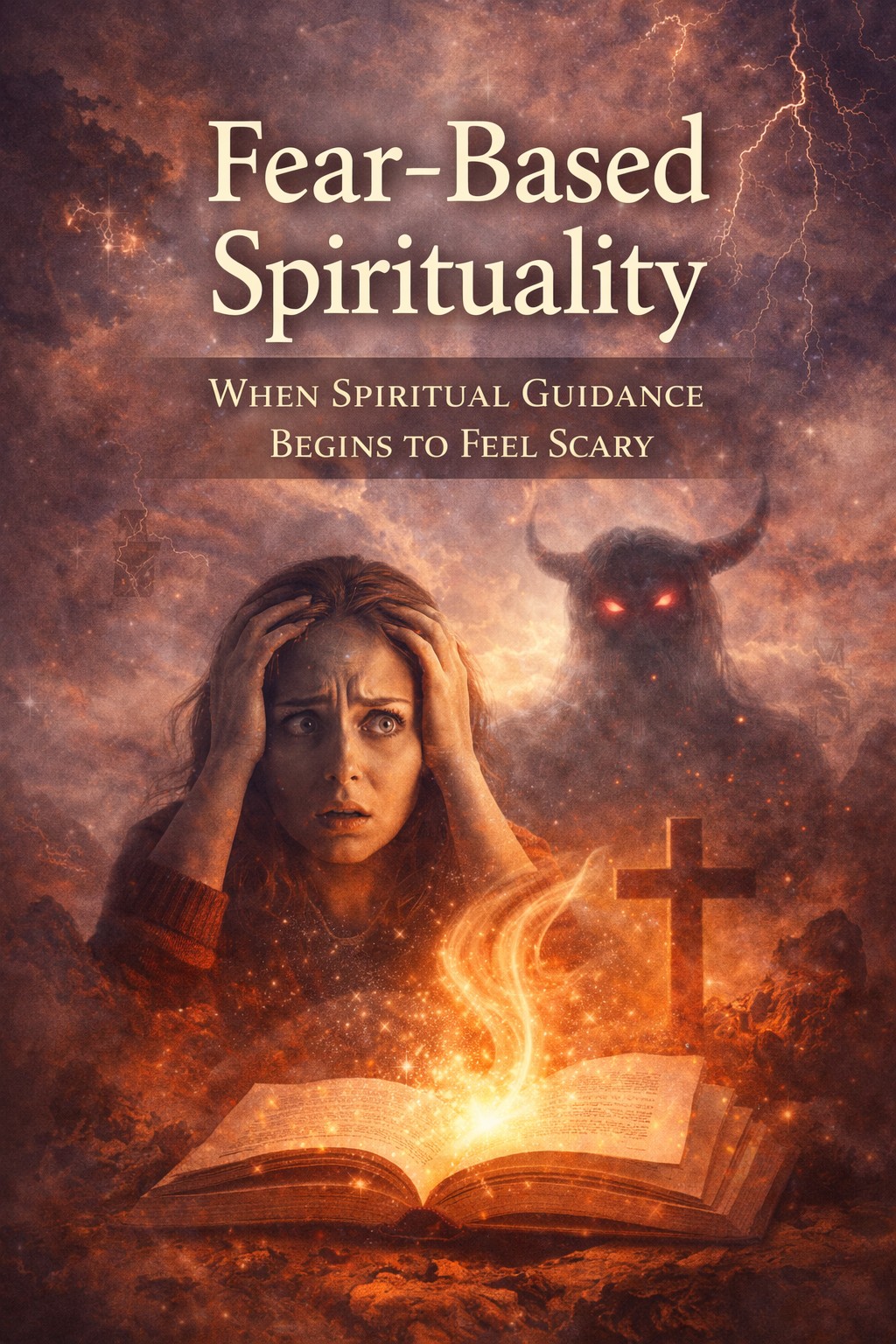
Fear doesn’t always come from what we believe, but from how spiritual guidance is delivered. In recent years, many people exploring spirituality, intuition, or faith have noticed a subtle shift in tone. Teachings that once felt supportive and healing can begin to rely on warning, urgency, or rigid certainty, a pattern often referred to as fear-based spirituality.
For those who turn to spirituality for grounding, meaning, or comfort, this shift can feel confusing and deeply unsettling. Instead of peace, anxiety creeps in. Instead of clarity, doubt and self-monitoring take over.
This article is not about deciding which belief system is right or wrong. It explores how fear-based spiritual messaging can affect emotional wellbeing, intuition, and discernment, and how to stay grounded in your own inner authority when spiritual guidance begins to feel frightening rather than supportive.
This Is Not About Belief: It’s About Fear
Before going further, it’s important to be clear about one thing.
This is not about deciding which belief system is right or wrong. Every spiritual and religious tradition has the potential to offer meaning, wisdom, and genuine transformation. People are allowed to follow different paths, change their beliefs, and interpret spirituality in ways that feel true to them.
What this is about is fear-based spirituality and how fear can subtly alter spiritual language and guidance, regardless of tradition.
Fear rarely announces itself openly. More often, it enters through tone rather than content. Teachings that once felt supportive may begin to rely on urgency, shame, or absolute certainty. Questions are discouraged. Nuance fades. Personal discernment is replaced by rigid rules or external authority.
Fear-based spirituality isn’t defined by what is believed, but by how belief is communicated and enforced. It shows up when guidance contracts rather than expands, when people feel anxious instead of supported, and when trust is replaced by vigilance.
This can happen anywhere, in intuitive spaces, religious communities, wellness culture, or self-help movements. No tradition is immune.
The common thread isn’t belief. It’s fear replacing care.
Why Does Spirituality Make Me Anxious?

Spirituality is often described as a source of peace and grounding. When anxiety appears instead, many people quietly wonder if something is wrong with them.
In reality, anxiety often has less to do with spiritual weakness and more to do with how spiritual information is delivered.
Anxiety tends to arise when messages feel overwhelming, urgent, or emotionally loaded, when teachings are framed as absolute, high-stakes, or time-sensitive. The nervous system responds to tone before it responds to belief.
This can happen when:
- messages feel relentless or intense
- there is “only one safe way” to believe or practise
- doubt is framed as danger rather than curiosity
- intuition is discouraged or mistrusted
- fear is used as motivation
For many people, spirituality becomes anxious not because it lacks truth, but because it lacks emotional safety.
Anxiety is often a signal that something feels rushed, rigid, or misaligned, an invitation to slow down and reconnect with a form of spirituality that feels supportive rather than demanding.
Why Do Spiritual Teachings Feel Scary?
Spiritual teachings tend to feel frightening when they shift from guidance toward control.
This rarely happens all at once. It’s often a gradual change in emphasis or framing that replaces reassurance with warning.
Teachings may begin to feel scary when they:
- emphasise punishment over compassion
- rely on fear to encourage obedience
- remove nuance or personal interpretation
- discourage questions or lived experience
Another common source of fear is when spiritual “safety” is placed entirely outside the individual. When protection or truth is framed as dependent on constant vigilance or external authority, the nervous system struggles to relax.
Tightness, dread, or pressure are not signs of spiritual failure, they are important signals that something may no longer feel supportive.
Is Intuition Dangerous?
This question often arises when spiritual messaging becomes rigid or fear-based.
Intuition itself is not dangerous. It’s a natural form of inner awareness, a way of noticing emotional signals, patterns, and subtle responses before the logical mind fully engages.
Intuition becomes confusing when:
- it’s treated as unquestionable truth
- it’s used without grounding or reflection
- emotional distress is mistaken for guidance
- it’s separated from compassion and context
- When your imagination works overtime and you think it’s your intuition
Healthy intuition works with discernment, not against it. It invites curiosity rather than urgency, and reflection rather than pressure.
When intuition is framed as unsafe, what’s often being discouraged isn’t intuition, it’s personal authority.
Spiritual Awakening

Some people experience fear or disorientation after a spiritual awakening, especially when their worldview shifts quickly.
This doesn’t mean awakening was a mistake. More often, it reflects inner structures changing faster than the nervous system can integrate.
Fear may arise when:
- old beliefs dissolve before new ones stabilise
- identity feels uncertain
- meaning is being renegotiated
- there is pressure to “get it right”
- emotional sensitivity increases faster than grounding skills
Fear after awakening is best understood as a transitional state, not a permanent one. With time, grounding, and gentle integration, stability often returns.
Awakening doesn’t require urgency. It unfolds through patience, compassion, and steadiness.
Is It Okay to Question Spiritual Beliefs?
Yes. Questioning is not a failure of faith or intuition, it’s often a sign of sincerity and growth.
Questioning becomes frightening when fear-based spirituality is present, and doubt is framed as danger or disobedience. Over time, this can erode trust in one’s own inner experience.
Discernment asks:
- Does this support compassion and understanding?
- Does it encourage growth or demand compliance?
- Does it leave me calmer, or more afraid?
Supportive spirituality allows belief to mature through reflection, not pressure.
Religious Trauma From Spirituality
Spiritual spaces can cause harm when fear, shame, or authority override emotional safety.
Spiritual trauma may show up as:
- anxiety around belief or practice
- fear of being “wrong” or unsafe
- guilt for trusting intuition
- difficulty relaxing into spiritual practices
Healing begins by reclaiming choice, pace, and personal authority. Recovery isn’t about rejecting spirituality, it’s about restoring safety so spiritual exploration can feel humane again.
Am I Being Misled Spiritually?
This question often arises when spiritual teachings feel confusing, contradictory, or emotionally unsettling. It can become especially loud in environments shaped by fear-based spirituality, where messages rely on urgency, warning, or absolute certainty rather than calm guidance.
Rather than seeking immediate certainty, it can be more supportive to slow the process down and gently reflect.
You might ask:
- Does this message empower me, or does it frighten me?
- Does it invite reflection and self-trust, or demand obedience and compliance?
- Do I feel calmer, clearer, and more grounded after engaging with it, or more anxious and on edge?
Fear-based spirituality often creates pressure to decide quickly, believe correctly, or align without questioning. But spiritual clarity rarely arrives through urgency.
You don’t need to rush to conclusions. Taking time to notice how a teaching affects your nervous system is a valid and wise form of discernment.
Why Do I Feel Fear Instead of Peace in My Faith?
Having faith, being spiritual, or walking a religious path, is often described as a source of peace. When fear dominates instead, it can feel deeply unsettling.
Fear tends to replace peace when:
- faith becomes rule-based rather than relationship-based
- love is conditional
- authority replaces compassion
- questioning is discouraged
Peace is not found in certainty alone. It grows through trust, safety, and emotional honesty.
How to Stay Grounded When Spiritual Messaging Feels Overwhelming
If spiritual content triggers fear or emotional overload, it’s okay to pause. Feeling overwhelmed doesn’t mean you’re failing spiritually, it often means your system needs space to breathe.
This is especially important in environments influenced by fear-based spirituality, where urgency, warning, or rigid certainty can make it hard to stay centred or emotionally regulated.
You might gently ask yourself:
- Does this teaching expand or contract my sense of self?
- Am I being invited into reflection and self-trust, or pressured into compliance?
- Does this message encourage compassion and understanding, or amplify fear and vigilance?
Grounding often begins with slowing down. You don’t need to absorb everything at once, make immediate decisions, or resolve uncertainty on demand.
You are allowed to step back.
You are allowed to take breaks from spiritual content.
You are allowed to move at a pace that feels supportive rather than overwhelming.
Returning Authority To The Reader
Spiritual paths are meant to support growth, not replace inner wisdom.
When fear softens, clarity tends to return. You are allowed to pause. You are allowed to trust your timing. You are allowed to walk your path thoughtfully and gently.
Wisdom Across Spiritual Traditions
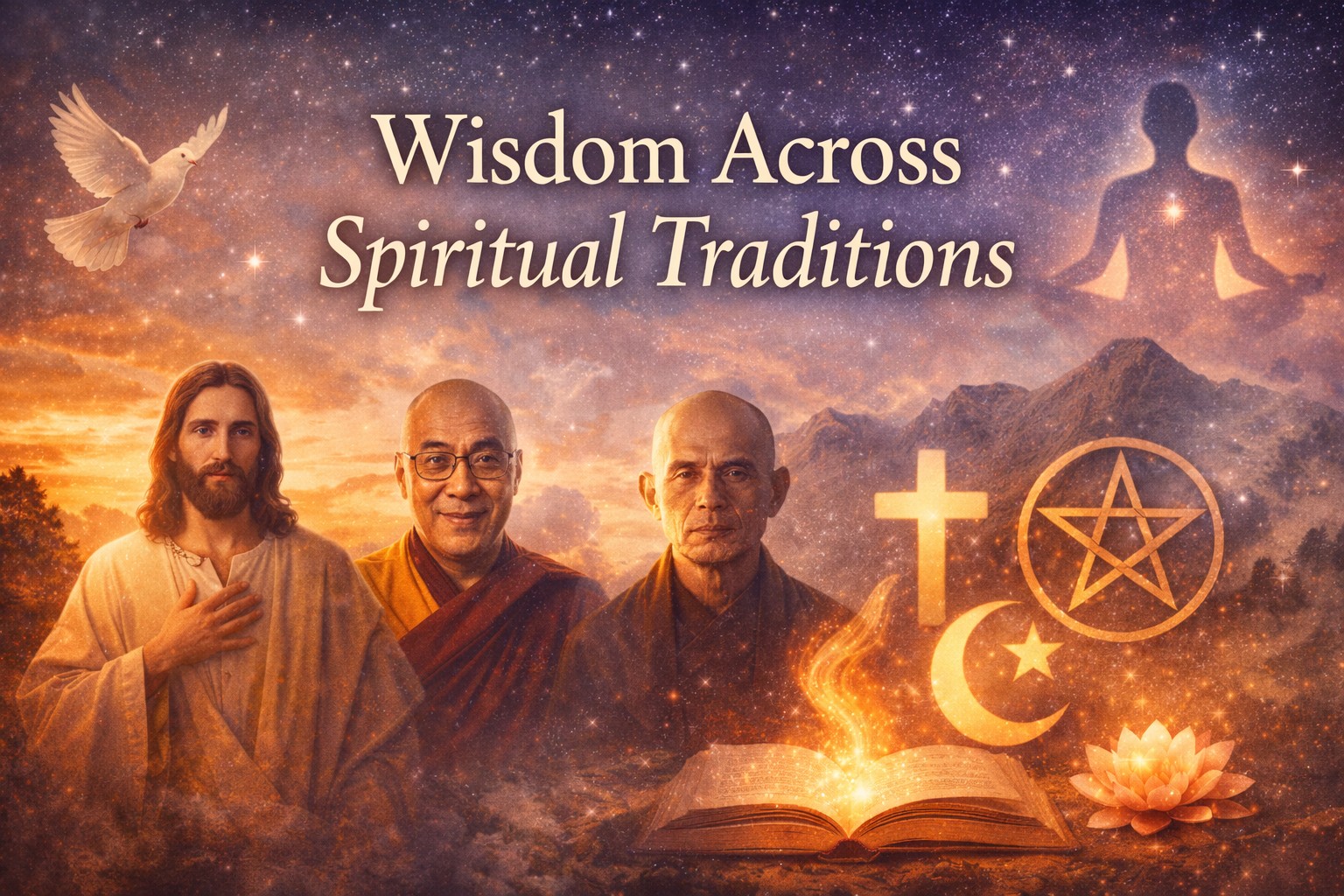
Across cultures and belief systems, spiritual teachers have long pointed toward inner conscience, compassion, and humility rather than fear or enforced certainty.
Jesus Christ
“The kingdom of God is within you.” (Luke 17:21)
This teaching points away from external authority and toward inner relationship and awareness. Rather than locating truth in rigid structures or fear-driven rules, it reminds us that spiritual connection is lived internally, through conscience, compassion, and presence.
Read this way, Jesus’ words affirm that spirituality is not something imposed from outside, but something cultivated within, a perspective that naturally allows for humility, diversity of understanding, and personal discernment.
Spiritualist Teachings
Spiritualist teachings hold that life continues beyond physical death and that loving connection between the spirit world and those on earth remains possible through awareness, intuition, and meaningful signs.
“Neither death nor life… nor anything else in all creation, will be able to separate us from the love of God.”
— Book of Romans 8:38–39
Muhammad
“There is no compulsion in religion.” (Qur’an 2:256)
This widely cited teaching affirms that faith cannot be forced. It must arise from inner conviction, not fear, pressure, or coercion.
Dalai Lama
“All major religious traditions carry basically the same message, that of love, compassion, and forgiveness.”
Here, shared values are centred over competing beliefs, pointing toward unity rather than division.
Thich Nhat Hanh
“When you understand, you cannot help but love.”
This reminds us that compassion grows from understanding, not fear, and that spiritual maturity often softens certainty rather than hardening it.
Pagan and Wiccan paths
“Do No Harm .”
Many earth-based traditions, including Pagan and Wiccan paths, emphasise personal responsibility, freedom of belief, and ethical awareness rather than fear, punishment, or enforced doctrine.
Your spiritual journey is allowed to be thoughtful, gentle, and humane. It can include questioning, reflection, pauses, and periods of not knowing, and it can still be meaningful, sincere, and deeply grounded.
Tools & Support for Psychic Awareness & Spiritual Empowerment
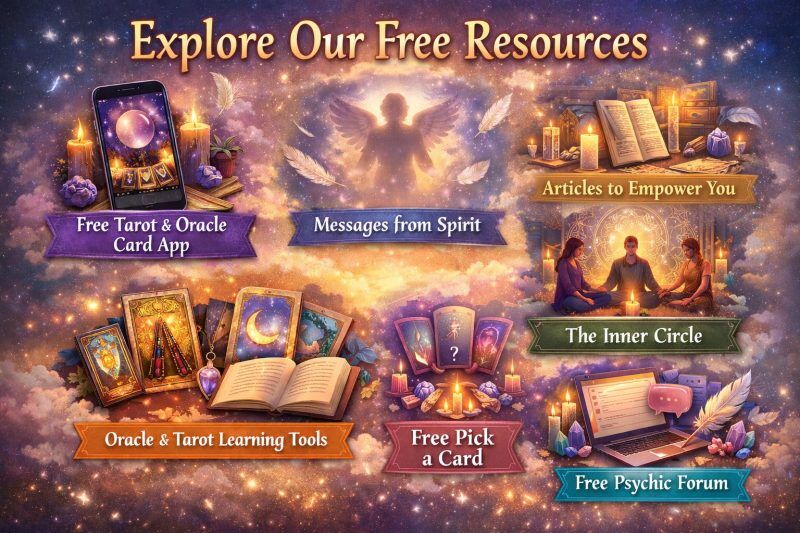
If this topic has stirred questions, emotions, or uncertainty, you don’t have to navigate it alone. Supportive spiritual exploration is meant to feel grounding, empowering, and safe.
You’re welcome to explore our free resources, created to help you develop psychic awareness and spiritual understanding at your own pace:
- Daily Messages from Spirit – gentle, intuitive insights to support reflection and clarity
- Free Tarot App – a calm, pressure-free way to explore intuitive card meanings
- Mystical Messages Newsletter – spiritual guidance focused on empowerment, not fear
- Inner Circle fee Psychic Forum – a supportive space to discuss spiritual experiences and questions with others on a similar path
For those who enjoy personal practice, our 6th Sense Connection Oracle Cards can be used privately and intuitively, without rigid rules or fear-based interpretations.
If you ever feel drawn to deeper, one-to-one support,private readings are available when you’re ready, offered as guidance rather than authority.
And if you’d like to help keep these resources available to others, gentle donations and shop support are always appreciated, never required.
Frequently Asked Questions About Fear-based Spirituality
Because conversations about spirituality and fear can feel sensitive, these frequently asked questions offer clarity and reassurance.
Is this post anti-religion?
No. This article is not anti-religion. It explores fear-based messaging that can appear across many belief systems and spiritual spaces, focusing on emotional impact rather than doctrine or faith.
Are you saying intuition is always right?
No. Intuition benefits from grounding, reflection, and discernment. This post supports balanced inner authority, not blind trust or impulsive decision-making.
Is this about specific teachers or movements?
No. This article does not target individuals or groups. It looks at common patterns and how fear-based spiritual guidance can affect people emotionally and psychologically.
What if fear-based spirituality helped me find clarity?
Fear can sometimes prompt awareness or reflection. However, long-term spiritual growth is usually supported by clarity, compassion, and empowerment rather than ongoing fear.
What if I’m unsure what to believe right now?
Uncertainty is a valid and healthy spiritual state. You don’t need immediate answers to remain grounded, supported, or connected to your own inner wisdom.
A Gentle Reminder About Your Spiritual Path
If a spiritual or religious message leaves you feeling afraid, ashamed, or emotionally unsettled, it is okay to pause and create space. Growth rooted in truth and love tends to feel grounding and expansive, not frightening or controlling.
Your relationship with God, the Universe, Spirit, whatever name feels true, is personal. No teacher or belief system has the authority to override your inner knowing.
You are allowed to choose what supports your wellbeing.
You are allowed to walk your path at your own pace.
And you are allowed to trust your own inner knowing again, even if fear-based spirituality once made that feel unsafe.
For me, after exploring many spiritual teachings over the years, I always return to my own relationship with Infinite Spirit. This is my truth as a psychic medium, author, mother, friend, and wife, deeply personal, shaped by lived experience rather than rules, and ultimately my path to walk. Just as yours is yours.