
How to Develop Your Intuition and Trust it (Start Here)
Have you ever had a quiet feeling that something was right—or wrong—before you could explain why? Perhaps you have experienced a sudden inner knowing, sensed someone’s emotions, noticed meaningful patterns or felt drawn towards a particular choice.
These experiences may be signs that your intuition is already working.
Intuition is your natural ability to notice feelings, impressions, patterns and inner awareness. You do not need to be born with a special gift to develop it. With patience, reflection and regular practice, you can become more aware of how your intuition communicates with you.
This beginner’s guide will show you how to develop your intuition gently, understand the different ways it may appear and build trust in your own inner guidance.
If you are looking for a simple way to explore intuitive guidance, read How to Get Answers from the Universe next.
Meet Your Guide: Anne-Marie McCormack
Written by Anne-Marie McCormack — psychic medium, Spiritualist reverend, Reiki Master Teacher, author and founder of 6th Sense Connection.
Anne-Marie has been developing and teaching intuitive awareness for more than 40 years. She began practising as a psychic medium in Manchester in 1983 and appeared on UK radio between 1983 and 1991, answering listeners’ questions and sharing spiritual insight.
After moving to Florida, Anne-Marie founded the 6th Sense Connection spiritual centre and store in Cassadaga in 2009. In 2013, she brought her work online, creating free educational resources, psychic-development guides, books, workshops and spiritual tools for people around the world.
She is also the creator of the award-winning 6th Sense Connection Oracle Cards and the author of books including Divination 101: Psychic Development.
Anne-Marie’s approach is practical, compassionate and grounded. She believes intuition should support personal reflection and self-understanding—not create fear, dependency or absolute promises.
What Is Intuition?
Intuition is the quiet awareness that helps you notice a feeling, thought, image, pattern or inner sense before you can fully explain it logically.
Some people experience intuition as:
- A feeling in the body
- A calm inner knowing
- A sudden thought or insight
- A visual image or symbol
- A word or phrase that comes into awareness
- A sense that something feels comfortable or uncomfortable
- An awareness of another person’s emotions

Intuition is personal. It can be understood spiritually, psychologically or as a combination of both. The important thing is to explore your experiences calmly, record what you notice and avoid assuming that every thought or feeling is an intuitive message.
Can Anyone Develop Their Intuition?
Intuition should not replace professional medical, legal or financial advice. Instead, it can be used as a reflective tool to help you listen to yourself more carefully.
Most people can become more aware of their intuition. Developing intuition is less about creating a new ability and more about noticing what is already happening within you.
Many people stop listening to their intuition because they are busy, anxious, distracted or afraid of making the wrong decision. Intuitive awareness often becomes clearer when you slow down and create space to notice your own thoughts and feelings.
You do not need to force an experience. Begin gently and allow your awareness to develop naturally.
Step 1: Discover How Your Intuition Works
Everyone experiences intuition differently, and learning how to develop your intuition starts with understanding how it naturally shows up for you.
Some people feel emotions deeply. Some receive sudden insights. Others notice signs, patterns or energy shifts around them.
The easiest way to understand your intuitive style is to explore it.
Take one of our free psychic quizzes to discover more about your natural abilities.
You can also begin with our Psychic Medium Quiz. These quizzes can help you recognise how your intuitive awareness may naturally show up.
You may want to come back to this guide more than once. Developing your intuition is not a one-time exercise—it is something you deepen over time.
The Four Stages of Intuitive Development
1. Awareness
The first stage is learning to notice your thoughts, emotions, physical sensations and first impressions without immediately judging them.
You may begin to notice that certain places feel peaceful, some situations feel uncomfortable or particular thoughts keep returning. Simply observe these experiences.
2. Interpretation
Once you notice an intuitive impression, consider what it may relate to.
Ask yourself: What was happening when I noticed this feeling?
- Was the impression calm or fearful?
- Did it arrive suddenly or develop through overthinking?
- Does it connect with something I already know?
- Is there another reasonable explanation?
Interpretation takes time. There is no need to decide immediately what every impression means.
3. Trust
Trust develops through experience and reflection. Keep a journal of your impressions and review it later to see whether you notice reliable patterns.
Trusting your intuition does not mean believing every thought automatically. Healthy intuition includes balance, common sense and the willingness to reconsider. Therefore it stengthen your spiritual connection to your intuition.
4. Refinement
Trusting your intuition does not mean believing every thought automatically. Healthy intuition includes balance, common sense and the willingness to reconsider.
A calm intuitive impression may feel simple and clear. Fear is often repetitive, urgent and focused on the worst possible outcome. This is not a fixed rule, but noticing the quality of an experience can help you understand yourself more clearly.
Three Simple Ways to Develop Your Intuition
Try the One-Minute Pause
Before checking your phone, opening an email or making a decision, pause for one minute.
Take a few slow breaths and notice:
- What is the first thought that comes to mind?
- What sensations do you notice in your body?
- Do you feel calm, tense, open or closed?
- Is there anything you need to consider before acting?
Write down what you noticed. The purpose is not to predict the future. It is to become familiar with your own inner responses.
Keep an Intuition Journal
Create a simple journal with four headings:
- What happened?
- What did I notice?
- How did the impression feel?
- What happened afterwards?
Review your notes once a week. This can help you identify patterns and recognise whether your impressions are becoming clearer or whether they are influenced by worry or expectation.
Practise with Everyday Situations
Before answering the phone, opening an email or meeting someone, notice your first impression.
Treat it as an observation rather than a guaranteed prediction. You are practising awareness—not trying to prove that you are psychic.
The more relaxed and curious you remain, the easier it becomes to learn how your intuition feels.
The Four Main Intuitive Pathways

If you are just beginning, it is natural to wonder what kind of intuitive or psychic ability you might have.
Most people do not experience intuition in just one way. It may show up differently for everyone. You may feel things deeply, sense energy around you or simply have a quiet inner knowing that turns out to be right.
Many intuitive abilities fall into a few natural types:
- Feeling — Empathy or Clairsentience: You pick up on emotions and energy around you. Explore our free psychic empath quiz.
- Knowing — Claircognizance: You simply know things without being told. You can explore this through our Psychic Medium Quiz.
- Seeing — Clairvoyance: You notice images, symbols or visual impressions. Learn more about different psychic abilities.
- Hearing — Clairaudience: You receive thoughts, words or inner guidance. You can explore this further through our psychic medium quiz.
These are often called the “clairs”, and most people have one or two that feel stronger than the others.
You do not need to label yourself or figure everything out straight away. This is simply about beginning to notice how your intuition already speaks to you.
Clairsentience: Intuitive Feeling
Clairsentience means receiving information through feelings or physical sensations. You may notice changes in your body or become aware of the emotional atmosphere around you.
This can be helpful, but it is also important to learn healthy boundaries so that you do not automatically assume every emotion belongs to you.
Claircognizance: Inner Knowing
Claircognizance is often described as suddenly knowing something without understanding how you know it.
It may appear as a quiet thought, a clear realisation or an answer that arrives unexpectedly. Record these impressions and reflect on them rather than acting impulsively.
Clairvoyance: Intuitive Seeing
Clairvoyance involves visual impressions, mental images, symbols, colours or scenes.
These images may be literal or symbolic. It can help to record exactly what you noticed before trying to interpret it.
Clairaudience: Inner Hearing
Clairaudience is commonly described as receiving words, phrases or sounds internally.
Always approach these experiences thoughtfully. If you hear voices that frighten you, distress you or tell you to harm yourself or someone else, seek support from a qualified medical or mental-health professional immediately.
Can Oracle Cards Help Develop Intuition?
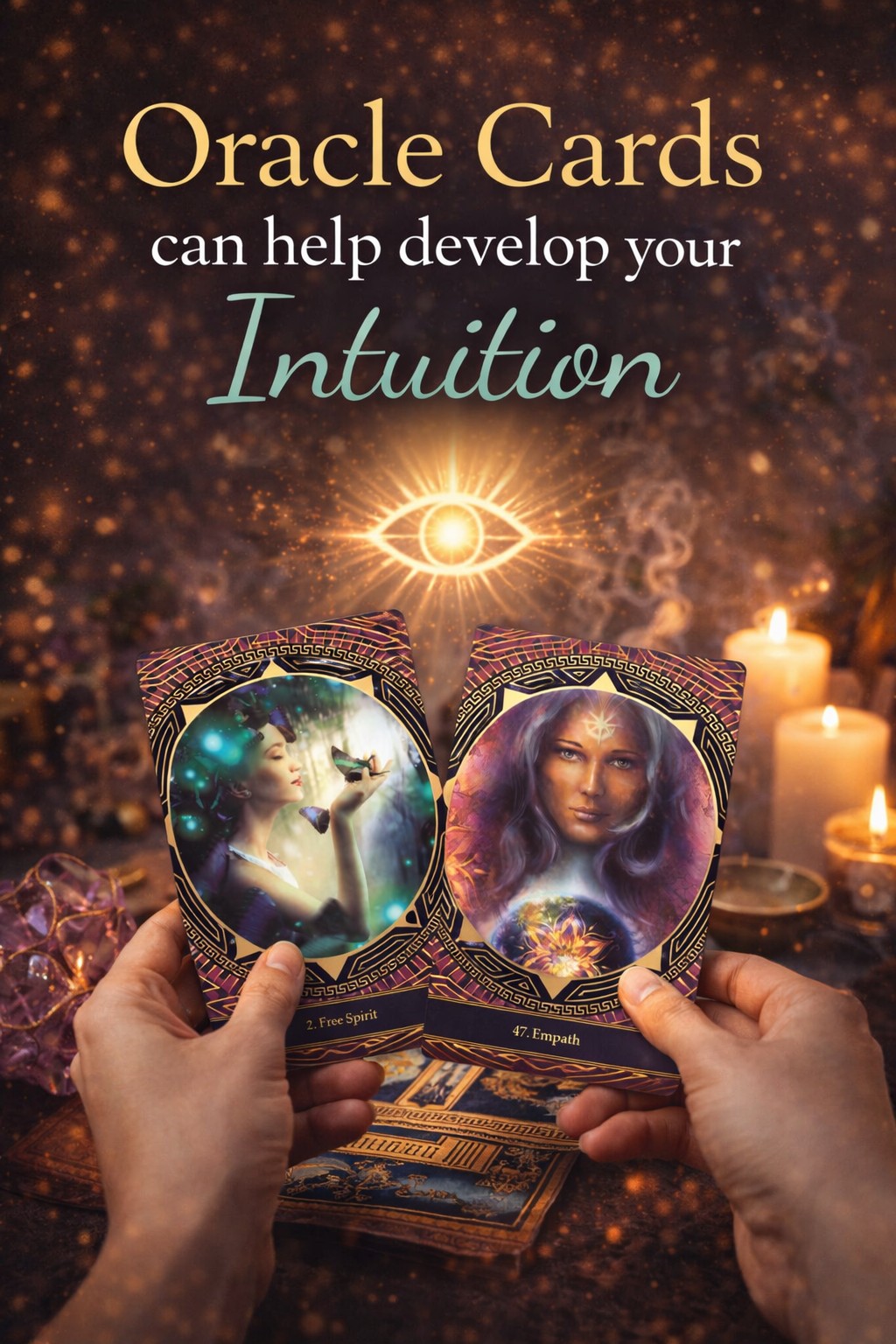
Oracle cards can provide a simple and meaningful structure for reflection. You do not need to be an experienced reader or know complicated card meanings to begin.
The 6th Sense Connection Oracle Cards were designed to help strengthen your intuition and encourage you to trust your own inner guidance. Each card offers an opportunity to pause, reflect and notice what thoughts, feelings or impressions arise naturally.
Choose a card, look carefully at the image and notice your first response. Before reading any guidebook meaning, ask yourself:
- What detail catches my attention first?
- What feeling does the card create?
- Does the image remind me of a person, situation or experience?
- What word or thought comes into my mind?
- What could this image represent in my current situation?
- Is there a message or reminder I need to consider?
- What practical action might support me today?
- How does the card’s message relate to what I am already feeling?
There is no need to force an answer or treat the card as a fixed prediction. Allow the image to act as a prompt that helps you access your own thoughts, feelings and inner perspective.
You may wish to keep a journal beside you and record the card you selected, your first impression and anything that happens afterwards. Over time, this can help you recognise your own intuitive patterns and develop greater confidence in your natural abilities.
If you would like to learn how to work with Tarot and Oracle Cards in greater depth, explore Divination 101, Anne-Marie’s practical guide to reading cards intuitively.
You Do Not Need To Use Psychic Tools
Tarot and Oracle cards are useful tools, but they are not essential. You can develop your intuition through:
- Quiet reflection
- Meditation or breathing exercises
- Journaling
- Time spent in nature
- Paying attention to your dreams
- Learning to recognise emotional patterns
- Practising mindfulness
- Asking yourself thoughtful questions
The tool is not the source of your intuition. It simply gives you another way to pause, reflect and listen.
How to Tell Intuition from Fear
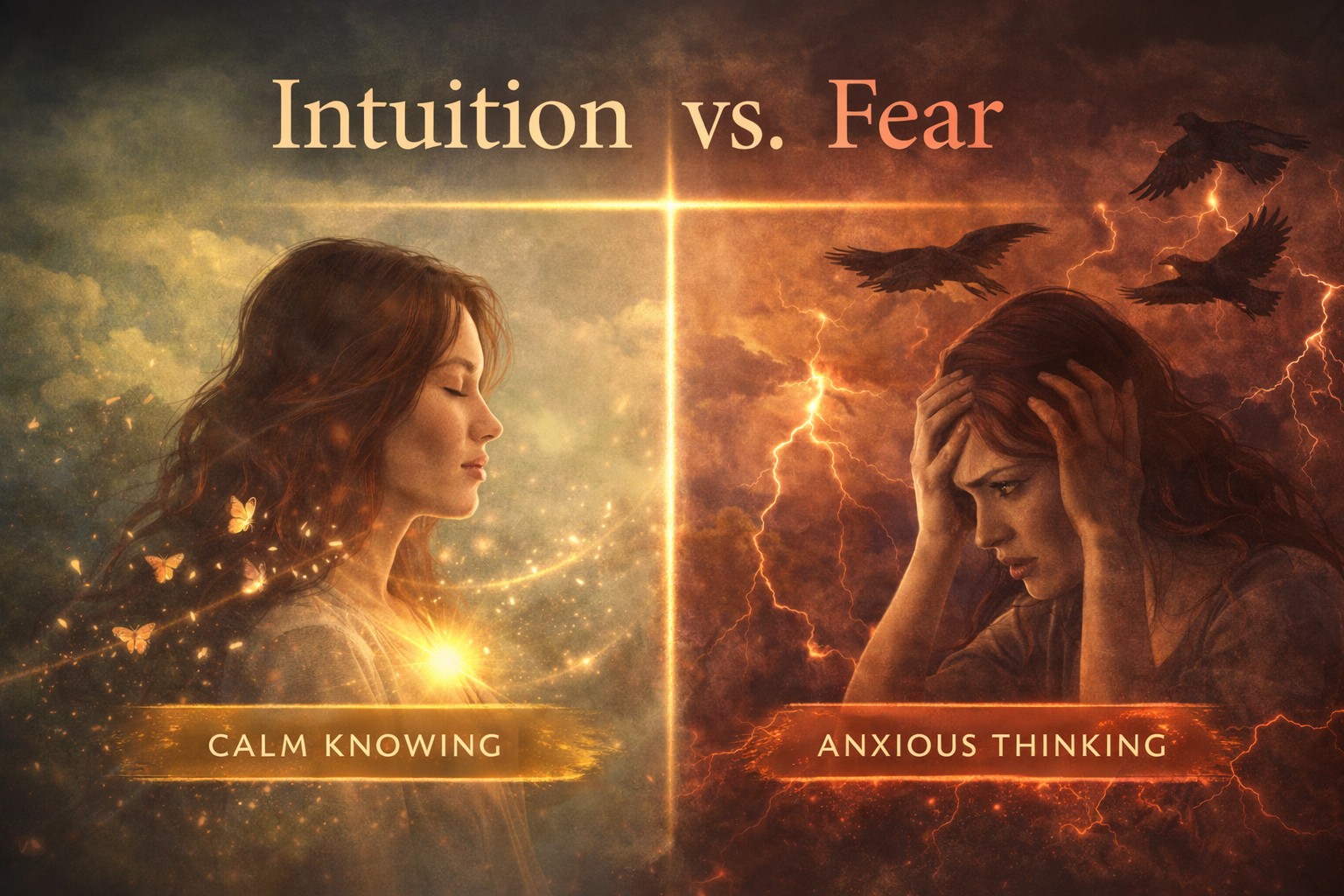
It is natural to wonder whether an impression is intuitive or simply caused by anxiety.
There is no single test that can provide an answer every time, but you can consider how the experience feels.
Intuition is often:
- Calm or quietly persistent
- Simple rather than complicated
- Connected to the present moment
- Open to reflection
- Free from the need to force an immediate answer
Fear or overthinking may be:
- Urgent and repetitive
- Focused on worst-case scenarios
- Driven by a need for certainty
- Physically overwhelming
- Based on assumptions rather than information
This is not a perfect formula. If you are uncertain, pause, gather practical information and speak with someone you trust before making an important decision.
You may also find it helpful to read our guide to the difference between intuition and imagination.
Protecting Your Energy

As you become more aware of your intuition, you may notice that certain people, places and environments affect your mood more strongly. You may feel emotionally drained after spending time with someone, sense tension in a room or need more time to recover after busy or demanding situations.
This does not mean that something is wrong. It may simply mean you are becoming more aware of how your surroundings affect your emotional and physical wellbeing.
Grounding and healthy boundaries can help you remain balanced. Try the following:
- Take regular breaks from emotionally demanding conversations.
- Spend time outdoors, especially in peaceful natural surroundings.
- Practise slow, steady breathing when you feel overwhelmed.
- Place both feet on the floor and bring your attention back to your body.
- Notice five things you can see, four things you can feel and three things you can hear.
- Imagine yourself surrounded by calm, protective light.
- Give yourself permission to say no without feeling guilty.
- Create quiet time each day to rest, reflect and reset.
- Keep your home or personal space calm and comfortable.
- Return your attention to the present moment instead of worrying about what might happen.
- Remember that being sensitive does not mean you have to remain open to everything and everyone.
Psychic protection should never be used to increase fear or make you feel unsafe. Its purpose is to help you feel centred, aware and connected to your own sense of self.
A Gentle Seven-Day Intuition Practice
For one week, spend five minutes each day writing in your journal.
Day one: Notice your first thought when you wake up.
Day two: Pay attention to how different environments affect you.
Day three: Record a dream, symbol or memorable image.
Day four: Pause before making a small everyday decision.
Day five: Notice whether you are carrying an emotion that belongs to someone else.
Day six: Use an oracle card as a reflection prompt.
Day seven: Review your notes and identify any repeated patterns.
Keep the practice gentle. You are not trying to create dramatic experiences. You are learning to pay attention.
You Do Not Need to Label Yourself
You do not need to decide immediately whether you are psychic, intuitive, empathic or spiritually sensitive.
Labels can sometimes be helpful, but they are not essential. Your experiences may change over time, and your understanding may develop gradually.
The purpose of intuitive development is not to prove anything to anyone. It is to become more aware of your thoughts, feelings and inner guidance while remaining grounded in everyday life.
When Should You Seek Additional Support?
Spiritual practices should feel supportive rather than frightening or overwhelming.
If your experiences cause significant distress, interfere with sleep or daily life, or include voices or instructions that frighten you, please speak with a qualified healthcare or mental-health professional. Seeking professional support is a sign of wisdom and self-care.
You can continue exploring spirituality while also receiving appropriate practical support.
Explore More Free Resources
One of the easiest ways to learn how to develop your intuition is to start by seeing what your natural gifts are. Our free psychic quizzes are designed to help you discover your natural talents and understand where to start.
We have created a library of comprehensive guides, articles and tools to support your intuitive development journey. There are no paywalls and no annoying adverts—just genuine, helpful content.
If this free guidance has been valuable to you, I’d genuinely appreciate your support. You can buy me a coffee or explore our shop—it helps me keep creating resources like these for the community. Otherwise, keep exploring—everything here is yours to access freely.
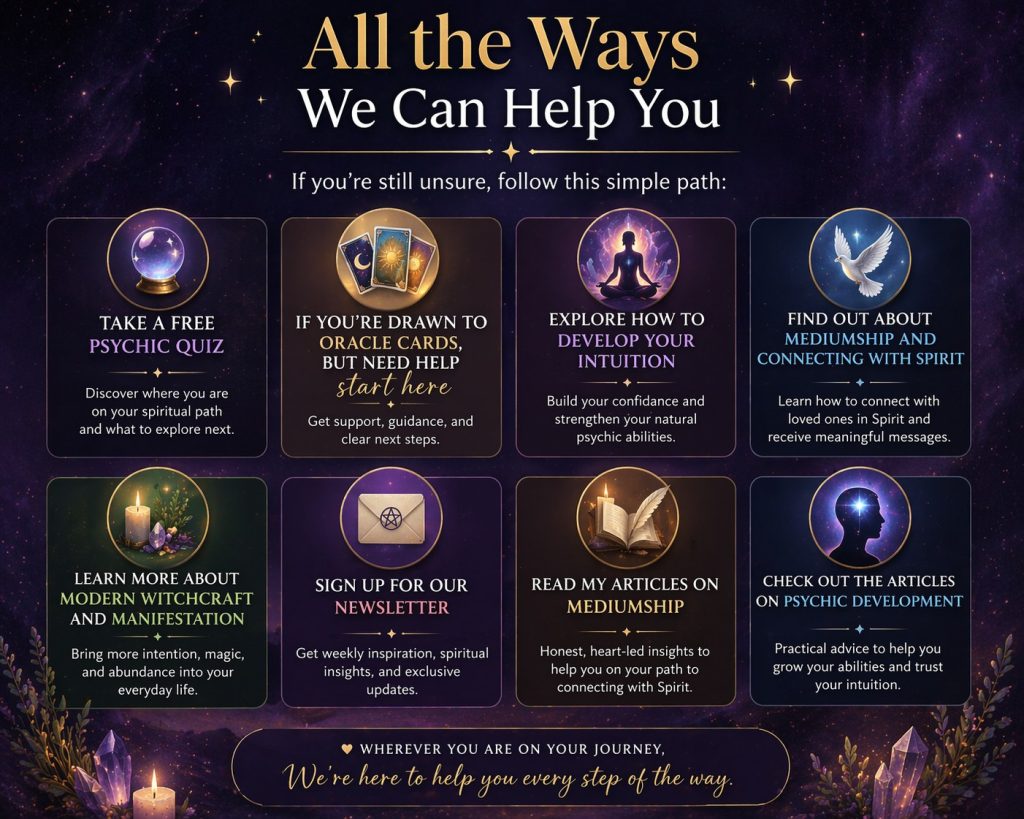
If you would like to continue learning, explore:
Follow this simple path:
Take A free Psychic Quiz
If you’re drawn to oracle cards, but need help start here
Explore how to develop your intuition
Find out about mediumship and connecting with Spirit
Learn more about Modern witchcraft and manifestation
Sign up for our newsletter
Read my articles on mediumship
Check out The articles on psychic development
You’re Not Alone on Your Spiritual Journey
Many people on this path feel like they are the only ones experiencing unusual feelings, signs or intuitive impressions.
If you would like to connect with others who are exploring their intuition, asking similar questions and sharing their experiences, you are welcome to join our free private community.

Ask questions safely
Share experiences
Learn from others on the same path
Begin Gently Exploring Your Intuition
You are not behind, and you do not have to understand everything immediately.
Developing your intuition is a gradual process of noticing, reflecting and learning to trust yourself with balance. Begin with one small exercise, keep an open mind and allow your understanding to grow naturally.
Your intuition may already be speaking quietly.
You are simply learning how to listen.
Frequently Asked Questions About How to Develop Your Intuition
Can anyone develop their intuition?
Many people can develop greater intuitive awareness. This usually involves learning to notice feelings, thoughts, patterns and impressions that may otherwise be overlooked.
What is the easiest way to develop intuition?
The easiest way to begin is to slow down, notice your first thoughts and feelings, and record your experiences in a journal. Regular, gentle practice is more useful than trying to force an unusual experience.
How long does it take to develop intuition?
There is no fixed timetable. Some people notice changes quickly, while others develop their awareness gradually over weeks, months or years. Consistent practice and honest reflection are more important than speed.
How can I tell intuition from fear?
Intuition may feel calm, simple and quietly persistent, while fear is often urgent, repetitive and focused on possible danger. This is not a perfect test, so use common sense and gather practical information before making important decisions.
What are the four main intuitive abilities?
The four commonly discussed intuitive pathways are clairsentience, or intuitive feeling; Claircognizance, or inner knowing; clairvoyance, or intuitive seeing; and clairaudience, or inner hearing.
Do I need oracle cards to develop intuition?
No. Oracle cards are optional tools. Intuition can also be explored through journaling, quiet reflection, meditation, nature, dreams and mindfulness.
How can I protect my energy while developing intuition?
Healthy boundaries, grounding, rest, breathing exercises and time away from emotionally demanding environments can help you feel more balanced. Psychic protection should support calm awareness rather than create fear.
Can intuition replace professional advice?
No. Intuition should not replace medical, legal, financial or mental-health advice. It can be used as a personal reflection tool alongside reliable professional information.
Do you really offer complimentary psychic development articles?
Yes, completely. We’ve created a comprehensive library of free guides, articles, and resources on psychic development, intuition, oracle cards, mediumship, and spiritual growth. Everything is accessible without paywalls or annoying adverts. You can explore the Psychic Development Hub anytime to access all of them.
Can I access the articles without signing up?
Yes. All our psychic development articles are available to read without requiring a newsletter signup, login, or membership. Simply explore the Psychic Development Hub and start reading whenever you’re ready.
Why do you offer so much at no cost?
I believe intuitive development should be accessible to everyone, regardless of budget. My mission is to help people recognize and trust their intuition—and that starts with providing genuine, helpful resources without barriers. If the free content has been valuable to you, I’d appreciate your support through a coffee donation or by exploring our paid offerings like courses, books, and readings.