Learn how to deepen your shadow work beyond awareness. Master integration techniques that transform your shadow self into your greatest ally, turning inner conflict into personal power and authentic living. In this article we’re exploring how to make the most of your shadow self.
Exploring the Shadow Self: A Journey to Self-Discovery
The shadow self is a concept introduced by Swiss psychiatrist Carl Jung, referring to the part of our unconscious mind that contains repressed emotions, instincts, and aspects of ourselves we often ignore or deny. While it may seem intimidating, embracing the shadow self can be one of the most powerful tools for personal growth, self-awareness, and transformation. Learning to recognize and integrate these hidden aspects allows us to cultivate a deeper connection with ourselves, leading to a more authentic and fulfilling life.
Beyond Self-Discovery: The Integration Challenge
You’ve done the work. You’ve journaled about your triggers. You’ve meditated on your shadow aspects. You’ve identified the patterns, named the fears, and gained clarity into what you’ve been avoiding.
So why doesn’t everything feel transformed?
This is the integration gap—the space between knowing your shadow and actually living as an integrated, whole person. Many people stop at awareness. They discover their shadow self, feel a moment of insight, and then wonder why their life hasn’t fundamentally shifted.
The truth? Awareness is just the beginning.
If you’re ready to move beyond self-discovery into actual mastery—where your shadow becomes your greatest asset rather than your greatest obstacle—then this is the work that matters.
Identifying the Shadow Self

Understanding Shadow Integration vs. Shadow Awareness
Shadow Awareness:
- Noticing your triggers
- Understanding your patterns
- Recognizing what you’ve been suppressing
- Naming your fears and desires
Shadow Integration:
- Embodying the wisdom your shadow carries
- Making peace with conflicting parts of yourself
- Using shadow insights to make empowered choices
- Transforming shadow traits into strengths
- Living authentically from a place of wholeness
The difference is profound.
Awareness without integration is like knowing you have a broken leg but never setting it. The knowledge exists, but the healing doesn’t happen. Integration is where you actually become whole.
If you haven’t yet begun working with your shadow, start here: How to Work With Your Shadow Self: A Complete Guide
To understand the shadow’s foundation, read: Shadow Self Meaning: What It Is, Why It Appears, and How to Work With It
The Shadow-Ego Dance: Advanced Understanding
At the heart of shadow work lies a complex relationship: the dance between your shadow self and your ego.
Your ego isn’t the enemy—but it is the guardian of your self-image. It works tirelessly to protect how you see yourself, filtering out anything that threatens that identity. This is where the shadow gets locked away in the first place.
The Ego’s Job:
The ego maintains your sense of “I am…” statements. “I am responsible,” “I am kind,” “I am strong,” “I am never angry.” When something contradicts these statements, the ego pushes it into shadow—out of sight, out of mind.
The Shadow’s Truth:
Meanwhile, your shadow holds everything the ego rejected. “I am sometimes irresponsible,” “I can be unkind,” “I have moments of weakness,” “I feel rage.”
Both are true.
Advanced Integration:
True mastery comes when you can hold both truths simultaneously. You are responsible and sometimes irresponsible. You are kind and capable of cruelty. You are strong and vulnerable. This isn’t hypocrisy—it’s wholeness.
Instead of the ego fighting to maintain a perfect self-image, integration means the ego becomes an ally. It learns to relax its grip on who you “should” be and allows you to be who you actually are.
Advanced Shadow Integration Techniques
Beyond the basics of journaling and meditation, true integration requires deeper work. Here are advanced techniques that most people never discover.
1. The Shadow Conversation (Internal Dialogue)
This is a powerful technique where you create an actual dialogue between your conscious self and your shadow self.
How to practice:
Sit quietly with a journal. Identify a shadow aspect you’re working with—perhaps anger, jealousy, or a desire you’ve suppressed.
Write a letter from your conscious self to your shadow aspect:
“Dear Anger, I’ve been pushing you away for years. I’m tired of pretending you don’t exist. I want to understand you. What are you trying to protect me from? What do you need me to know?”
Then, switch hands (or write from a different perspective) and let your shadow respond:
“I’ve been here because you needed to be ‘nice’ to survive. Every time someone was angry at you, you learned that anger = danger. So you locked me away. But I’m not dangerous—I’m your boundary keeper. I show up when your limits are being crossed. Let me help you.”
Continue this dialogue. Let the shadow speak. Don’t judge it. Listen.
This practice bypasses the rational mind and accesses deeper truths.
2. Shadow Embodiment Work (Somatic Integration)
Integration isn’t just mental—it’s physical. Your shadow lives in your body as tension, held breath, clenched muscles.
How to practice:
- Identify a shadow aspect (fear, anger, shame)
- Stand alone in a safe space
- Move your body as if you ARE that emotion. If it’s anger, let your body move with that fire. If it’s fear, let it shake. If it’s shame, notice how your body wants to curl inward.
- Move for 2-3 minutes without stopping. No judgment, no “doing it right.”
- Then pause. Notice what shifted in your body and emotions.
- This simple act of embodying (rather than resisting) the shadow helps integrate it at a somatic level.
The shadow dissolves faster when we stop fighting it and start moving with it.
3. The Reframe Ritual
Every shadow trait has a gift. The gift is hidden beneath the protective layer of pain.
How to practice:
Take a shadow trait that bothers you. Write it at the top of a page: “My jealousy” or “My controlling nature” or “My people-pleasing.”
Below that, complete these sentences:
“This trait shows me I value…” (jealousy shows me I value deep connection) “This trait is trying to protect me from…” (fear of abandonment) “The gift hidden in this trait is…” (the ability to recognize what I truly want and deserve) “When I’m operating from the gift instead of the fear, I…” (honor my needs and choose people wisely)
Now, write a declaration:
“I am no longer ashamed of my jealousy. It shows me I have the capacity for deep love and commitment. I choose to honor this capacity by being selective with my trust and energy.”
This transforms shame into wisdom.
4. Shadow Integration Through Relationships
You cannot truly integrate your shadow in isolation. Your shadow is revealed most clearly through relationships—especially the ones that trigger you most.
How to practice:
When someone triggers you, pause and ask:
- “What is this person reflecting back to me that I don’t want to see?”
- “What quality do I judge most harshly in them—and where do I embody that same quality?”
- “What boundary or need of mine is being violated?”
Then, instead of blaming them or withdrawing, you have an opportunity for integration. You can:
- Set a boundary (honoring your shadow’s wisdom)
- Have an honest conversation (speaking your truth, not performing)
- Make a different choice in how you respond (embodying your integrated self)
Relationships become your shadow work laboratory.
5. The Witness Practice (Conscious Detachment)
Advanced integration also means learning to witness your shadow without being consumed by it.
When an old pattern or shadow aspect arises, instead of trying to fix it or judge it, practice this:
“I notice anger is here. I can observe it without acting from it. It’s moving through me, but it is not me. What is this showing me?”
This isn’t suppression. It’s conscious witnessing—the ability to see your shadow self with clarity and compassion, without being controlled by it.
Using Oracle Cards for Ongoing Shadow Mastery

Oracle cards are a powerful tool for tracking, understanding, and deepening your shadow work over time. Once you’ve begun the foundational work, cards can help you move into advanced integration. Try our pick a card shadow work reading!
Shadow Integration Spread (5 Cards)
Draw cards weekly or monthly to monitor your progress:
1. What aspect of my shadow is most active right now? This shows you what’s bubbling up to be integrated.
2. What wisdom is this aspect trying to share? This reveals the gift beneath the pain.
3. How is this showing up in my life? This shows you where integration is needed most.
4. What’s the invitation here? This guides your next step.
5. How do I embody this integrated? This shows you what wholeness looks like.
Using 6th Sense Connection Oracle Cards
The 6th Sense Connection Oracle Cards are particularly powerful for shadow work because they honor both light and shadow simultaneously. Each card carries nuanced wisdom that speaks to integration rather than judgment.
Card 42, “Naughty But Nice,” is especially powerful for shadow work—it acknowledges that our so-called “flaws” often contain our greatest strengths.
Instead of fearing your inner darkness, 6th Sense Connection Oracle Cards help you see it as an essential part of your personal and spiritual evolution, leading to greater self-love, emotional balance, and authentic living.
Sustaining Your Transformation: Creating Shadow Work Rituals
Integration isn’t a one-time event. It’s an ongoing practice. The shadow doesn’t disappear—it evolves as you evolve.
Creating rituals keeps your shadow work alive and prevents regression.
Weekly Shadow Check-In (20 minutes)
Every Sunday evening, create a simple ritual:
- Light a candle
- Pull an oracle card: “What do I need to see about my shadow this week?”
- Journal for 10 minutes in response
- Reflect on where you embodied your integrated self this past week
- Close with a declaration: “I am whole. I honor all of me.”
This keeps you connected to your shadow work without it feeling like a burden.
Monthly Shadow Integration Circle
If you have trusted friends doing their own shadow work, gather monthly to:
- Share what you’re discovering in your shadow
- Reflect on what’s being integrated
- Hold each other accountable to wholeness, not perfection
- Celebrate the growth that comes from integration
This is especially powerful for psychic development communities.
Seasonal Deep Dives
Every three months, dedicate a longer session (1-2 hours) to deeper shadow work:
- Revisit what you discovered in earlier work
- Notice what’s shifted
- Identify new shadow aspects that have emerged
- Ask: “How have I integrated this over the last three months?”
- Set intentions for the next cycle
Embodying Your Integrated Shadow in Daily Life
Integration only matters if it changes how you live.
Speaking Your Truth (From Shadow Wisdom)
Before your shadow work: You suppress your needs to keep the peace.
After integration: You can say “I’m not comfortable with that” without guilt or aggression. Your shadow’s protective wisdom becomes your boundary-setting superpower.
Making Authentic Choices
Before: You make decisions based on what you think you “should” want.
After: You make decisions honoring both your light and shadow. You pursue ambitions without shame. You rest without guilt. You speak up without apologizing.
Relationship Authenticity
Before: You perform. You hide parts of yourself. You wait for others to accept you before showing up fully.
After: You show up as the whole person you are. You allow others to see your complexity. You attract people who can meet the real you, not the image you’ve been maintaining.
Creative Expression
Your shadow contains fierce energy, raw emotion, and untamed desire. Integrated, this becomes creativity.
- Write with honesty about what you’ve felt
- Create art that doesn’t apologize
- Speak publicly about your journey without minimizing your experience
- Build work in the world that comes from your authentic self, not your performing self
Common Shadow Work Pitfalls (and How to Navigate Them)
Pitfall #1: Using Shadow Work as an Excuse
“My shadow made me do it.” / “I’m just expressing my authentic anger.”
The truth: Integration means choosing how to express what your shadow brings up. It’s not about unleashing every impulse. It’s about conscious choice.
How to navigate: Ask yourself: “Am I acting from my shadow’s wisdom, or am I using my shadow as an excuse to avoid responsibility?” There’s a difference between honoring anger and using anger to harm.
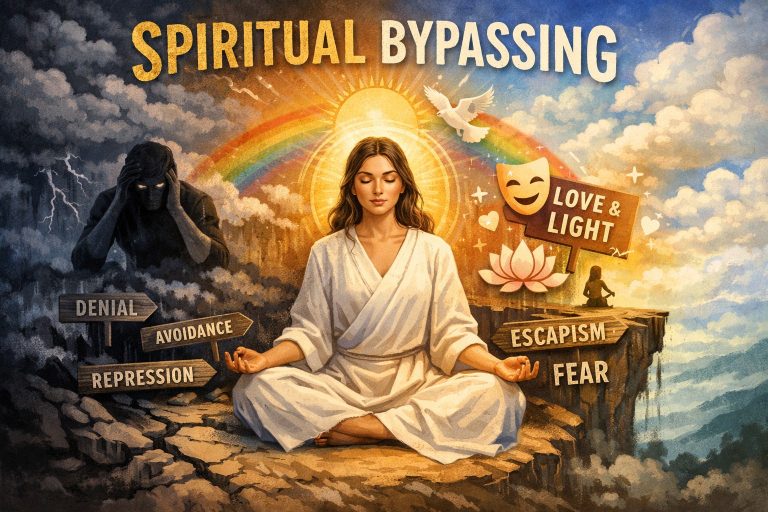
Pitfall #2: Spiritual Bypassing Through Shadow Work
Using shadow work to avoid real healing. “I’ve acknowledged my jealousy, so I’m good” without actually addressing the wound beneath it.
How to navigate: Understand spiritual bypassing and recognize when you’re using insight as a substitute for transformation.
Pitfall #3: Shadow Work Becoming Self-Indulgent
Dwelling in your shadow, identifying with it, using it as a story rather than moving toward integration.
The shift: Shadow awareness → integration → embodiment. If you’re stuck in step one, you’re not making progress.
How to navigate: Ask: “Am I working with this, or am I wallowing in it?” Integration always moves toward wholeness and choice, not deeper identification with your wounding.
Pitfall #4: Expecting Perfection
Thinking once you’ve integrated your shadow, you’ll never struggle again.
The truth: Integration doesn’t erase your humanity. You’ll still feel anger, jealousy, and fear. The difference is you won’t be blindsided by them. You’ll recognize them, understand them, and work with them consciously.
How to navigate: See shadow work as a lifetime practice, not a destination.
Pitfall #5: Doing This Alone Too Long
Shadow work can be isolating. Without mirror or guidance, you can spiral into self-judgment.
How to navigate: Share your journey with trusted people. Consider working with a therapist or shadow work coach for deeper issues. Your community is part of your integration.
Shadow Work in Relationships and Boundaries
This deserves special attention because relationships are where shadow work becomes real.
Before Integration:
- You attract people who trigger your shadow (often unconsciously)
- You either merge with them (losing yourself) or reject them (cutting off connection)
- Conflict feels like danger
- You hide your needs to keep the relationship safe
After Integration:
- You’re conscious of what triggers you and why
- You can stay present in conflict without collapsing or attacking
- You set boundaries not from fear but from self-respect
- You attract people who can meet your wholeness
The Shadow Work Practice in Relationships:
When someone triggers you:
- Pause – Don’t respond immediately
- Recognize – “This is my shadow being activated. What am I seeing that I haven’t accepted in myself?”
- Understand – What does this person represent? What boundary is being crossed? What wound is being touched?
- Respond – From your integrated self, not your triggered self
This transforms relationships from reactive to conscious.
When to Seek Professional Support
Shadow work is deep. Sometimes it goes deeper than journaling and meditation can reach.
Consider working with a professional if:
- You’re experiencing trauma responses (flashbacks, dissociation, overwhelming anxiety)
- You struggle with addictive patterns and can’t understand their root
- Your shadow work is triggering depression or suicidal thoughts
- You have a history of abuse and need safety while processing
- You’re stuck in the same pattern despite your awareness
- You’re experiencing major life disruption from shadow integration
Types of professionals who specialize in shadow work:
- Therapists trained in trauma-informed care
- Shadow work coaches or mentors
- Somatic practitioners (for body-based integration)
- Jungian analysts (specialized in shadow work)
- Psychic mediums or spiritual advisors (if working with intuitive guidance)
There is no shame in seeking support. Sometimes the most advanced integration work happens with guidance.
The Lifetime Practice of Shadow Mastery
Here’s what most people don’t tell you about shadow work: it never ends, and that’s the beauty of it.
Your shadow self isn’t a problem to solve. It’s not a disease to cure. It’s an invitation to deeper humanity, richer authenticity, and genuine wholeness.
In your 20s and 30s, shadow work might focus on:
- Reclaiming suppressed desires
- Understanding family patterns
- Building healthy boundaries
In your 40s and 50s, it might shift to:
- Integrating your authentic power
- Releasing perfectionism
- Claiming your wisdom and authority
In your later years, it often becomes:
- Accepting your humanity completely
- Passing wisdom to others
- Finding peace with who you’ve been
The shadow work that matters most is the work that happens in real time, in real relationships, in real choices.
Not the insights in your journal. Not the breakthroughs in meditation. But the moment you speak up when you used to stay silent. The moment you set a boundary you’ve been afraid to set. The moment you love yourself enough to honor all of you—not just the parts that are “spiritual” or “good.”
That’s mastery.
Moving From Theory to Practice
You now understand shadow integration at a deep level. But knowledge without application is just interesting information.
Your next steps:
- Choose one technique from the advanced methods section and practice it this week
- Create a ritual that honors your ongoing shadow work
- Share your journey with someone you trust
- Trust the process – integration doesn’t happen overnight, but it does happen
Your shadow self has been trying to reach you. It’s not here to sabotage you. It’s here to complete you.
The question isn’t whether you’ll do this work. Life will keep bringing you opportunities to meet your shadow until you do.
The question is: will you meet it with curiosity and compassion? Will you learn from it? Will you let it make you whole?
If you haven’t yet begun your shadow work journey, start here: How to Work With Your Shadow Self: A Complete Guide to Healing, Growth & Hidden Power
To deepen your understanding of the shadow’s meaning: Shadow Self Meaning: What It Is, Why It Appears, and How to Work With It
To understand when shadow work becomes spiritual bypassing: Spiritual Bypassing: Are You Avoiding What Needs Healing?
Frequently Asked Questions About Shadow Work Integration
Q: What’s the difference between shadow awareness and shadow integration?
Shadow awareness is noticing your patterns and understanding what you’ve been suppressing. Shadow integration is actually living differently because of that awareness. Awareness alone doesn’t transform your life—integration does. You’ll know you’re integrating when your behavior shifts, your relationships change, and you make different choices without having to think about it.
Q: How do I know if I’m actually integrating, or just thinking about my shadow?
Real integration shows up in behavior. You stop repeating patterns. You set boundaries you couldn’t before. You react less. You make different choices. People notice. You notice. If your external life hasn’t changed, you’re still in the awareness phase—which is fine, but keep going.
Q: I’ve integrated some of my shadow, but new shadow aspects keep emerging. Is that normal?
Absolutely. Integration is not linear. As you evolve, new layers of your shadow reveal themselves. This isn’t failure—it’s deepening. Your shadow work becomes richer and more nuanced over time. You’re not starting over; you’re spiraling deeper.
Q: Can shadow work make me a “darker” person or bring out the worst in me?
No. Integration actually makes you less destructive, not more. When you stop denying your shadow, it has less power to control you unconsciously. You become more conscious, more choice-full. You’re less likely to act destructively because you’re working with your shadow intentionally, not being controlled by it from the background.
Q: How often should I do shadow work?
This is personal. Some people practice daily. Others do weekly rituals. The key is consistency, not intensity. Even 10 minutes of weekly reflection is more powerful than sporadic deep dives. Find a rhythm that feels sustainable and stick with it.
Q: Is shadow work ever “done”?
No. Shadow work is a lifetime practice, and that’s the gift of it. But it changes over time. Early on, it’s intensive and sometimes painful. Over time, it becomes a gentle, ongoing way of staying conscious and whole. You’re not trying to finish; you’re learning to live from a place of integration.
Q: Can I do shadow work alongside spiritual practices like meditation or prayer?
Yes, in fact they work beautifully together. Meditation helps you observe your shadow without judgment. Prayer or spiritual practice provides a container of safety. They complement each other perfectly. Shadow work isn’t separate from spirituality—it’s part of it.
Q: What if I don’t want to accept parts of my shadow?
That’s honest. Some shadow aspects are genuinely difficult. The practice isn’t forced acceptance but honest acknowledgment. You don’t have to like every part of yourself, but you do have to own it. That ownership is where your power is.
Q: What if my shadow work uncovers trauma?
Shadow work often brings forgotten or suppressed memories to the surface. This is healing happening, but it requires care. If trauma emerges, slow down and work with a professional. Trauma needs specialized support, not just awareness. There’s no shame in seeking help.
Q: Can I do shadow work while on medication for anxiety or depression?
Yes, absolutely. In fact, it can be more effective with proper medical support. Your medication creates the stability you need to do deep work safely. Work with both your healthcare provider and a shadow work guide. They work together, not against each other.
Q: How does shadow work change romantic relationships?
Dramatically, usually for the better. When you stop performing and start being authentic, you attract more genuine partners. Existing relationships either deepen (as you show up more fully) or reveal they were built on performance rather than real connection. Both outcomes are healing.
Q: Can I use oracle cards alone for shadow work, or do I need the other techniques?
Cards are a wonderful tool, but they work best combined with other practices. Cards can point to your shadow, but journaling, dialogue work, and embodiment help you actually integrate it. Use them together for maximum impact.
Q: What if I realize my entire life has been built on shadow suppression?
This is actually not uncommon, and it’s important to honor this realization. You haven’t “wasted” your life—you were operating with the awareness you had. Now, you can rebuild from a place of wholeness. This is called a “life reconstruction,” and it’s one of the most profound transformations available.
Here’s a powerful conclusion for the post:
Your Invitation to Wholeness
Shadow work integration is not for the faint of heart. It requires courage to look at what you’ve spent a lifetime avoiding. It demands honesty when it would be easier to pretend. It asks you to love parts of yourself that society told you to hate.
But here’s what happens when you do this work:
You stop fighting yourself.
And when you stop fighting yourself, everything changes.
Your relationships become real instead of performed. Your choices come from wisdom instead of fear. Your energy returns—the enormous amount of energy you’ve been using to keep your shadow locked away becomes available for creating, loving, and becoming.
You become magnetic, not because you’re perfect, but because you’re real.
The people who matter gravitate toward authenticity. The work you do in the world carries weight because it comes from your whole self, not your fractured self. Your intuition strengthens because you’re no longer ignoring the messages your shadow has been sending.
This is the promise of shadow work integration: not perfection, but wholeness. Not the elimination of difficult emotions, but the conscious, empowered relationship with them. Not becoming a different person, but finally becoming yourself.
Until next time,
Love, light, and chocolate
Anne-Marie