Most of us have, even if we didn’t realise it at the time.
Spiritual growth is one of the most beautiful journeys you can take. It can bring clarity, comfort, and a deep sense of connection, to yourself, to others, and to something greater than you.
But sometimes, without realising it, spiritual beliefs and practices can quietly become a way of avoiding what actually needs to be faced.
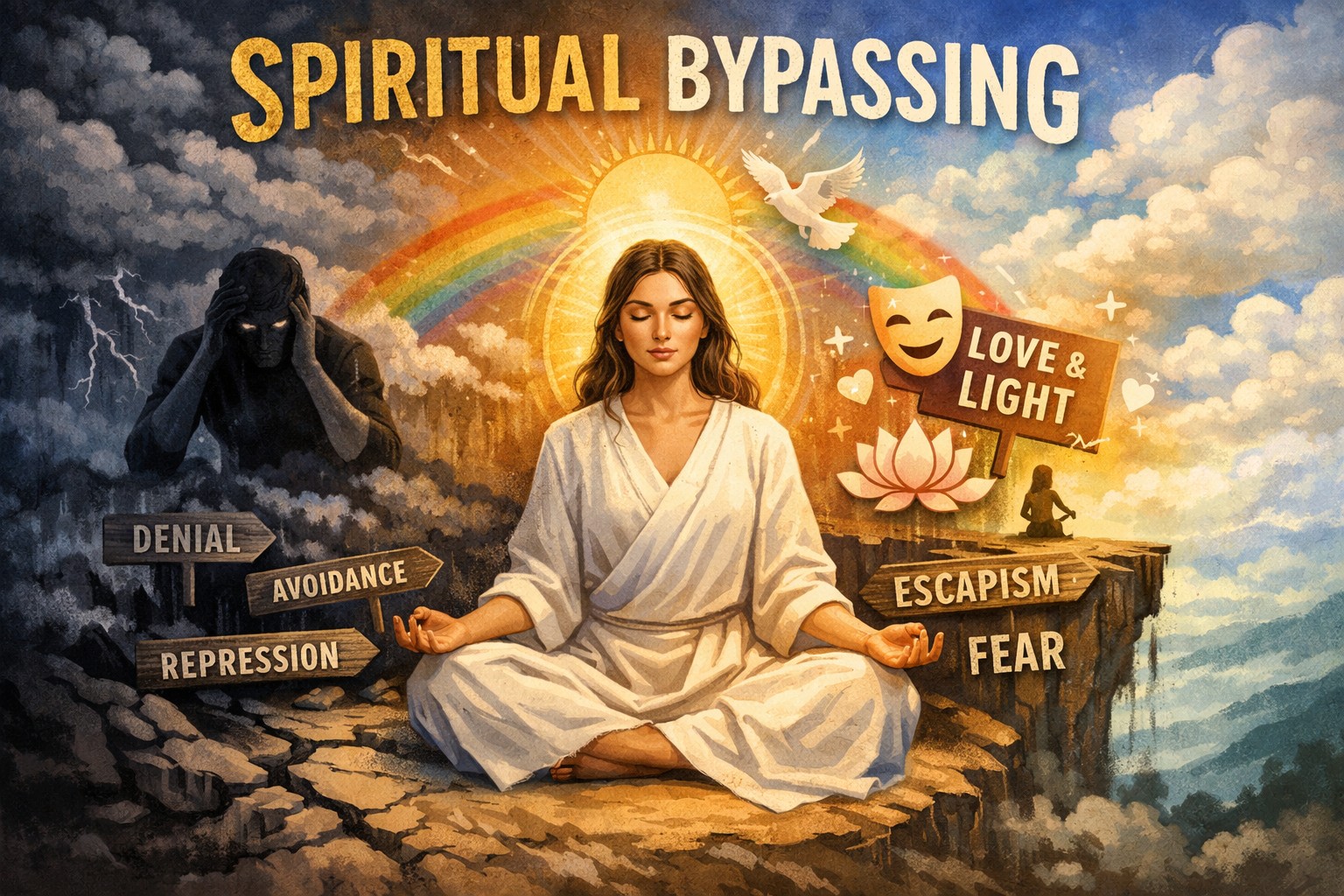
This is called spiritual bypassing, and it’s far more common than most people realise.
It doesn’t come from a bad place. It usually starts with a genuine desire to feel better, stay positive, and keep moving forward. But instead of healing what’s underneath… it gently steps around it.
And the thing about unhealed wounds? They have a way of finding you again.
What Is Spiritual Bypassing?
It is the way we use spiritual beliefs or practices to avoid dealing with difficult emotions, unresolved experiences, or personal challenges.
The term was coined by psychologist and Buddhist teacher John Welwood in the 1980s, after noticing a pattern in his own spiritual community, people sincerely committed to growth, yet consistently using spiritual ideas to sidestep emotional wounds rather than heal them.
He called it premature transcendence, trying to rise above the raw and messy side of being human before fully facing and making peace with it.
Importantly, spiritual bypassing is a defence mechanism, and an equal-opportunity one. It doesn’t matter which tradition you follow or how long you’ve been on your path. Any spiritual practice can be used this way, because it has less to do with the practice itself and more to do with what we bring to it.
It can sound like:
- “Everything happens for a reason” — said before the pain has actually been felt
- “Just stay positive” — when difficult emotions are being pushed aside
- “I’ve forgiven and moved on” — without fully working through what happened
- “I don’t get angry anymore, I’ve done the work” — when anger is actually being suppressed
- “It was bad karma” — used to explain away hurt without examining what really happened
- “I’m keeping the peace” — when necessary conversations are being avoided
- “This is part of my soul’s journey” — used to justify staying in situations that aren’t healthy
None of these statements are wrong in themselves. The difference is when they’re used, and whether they’re helping you move through something, or quietly around it.
Why Does Spiritual Bypassing Happen?
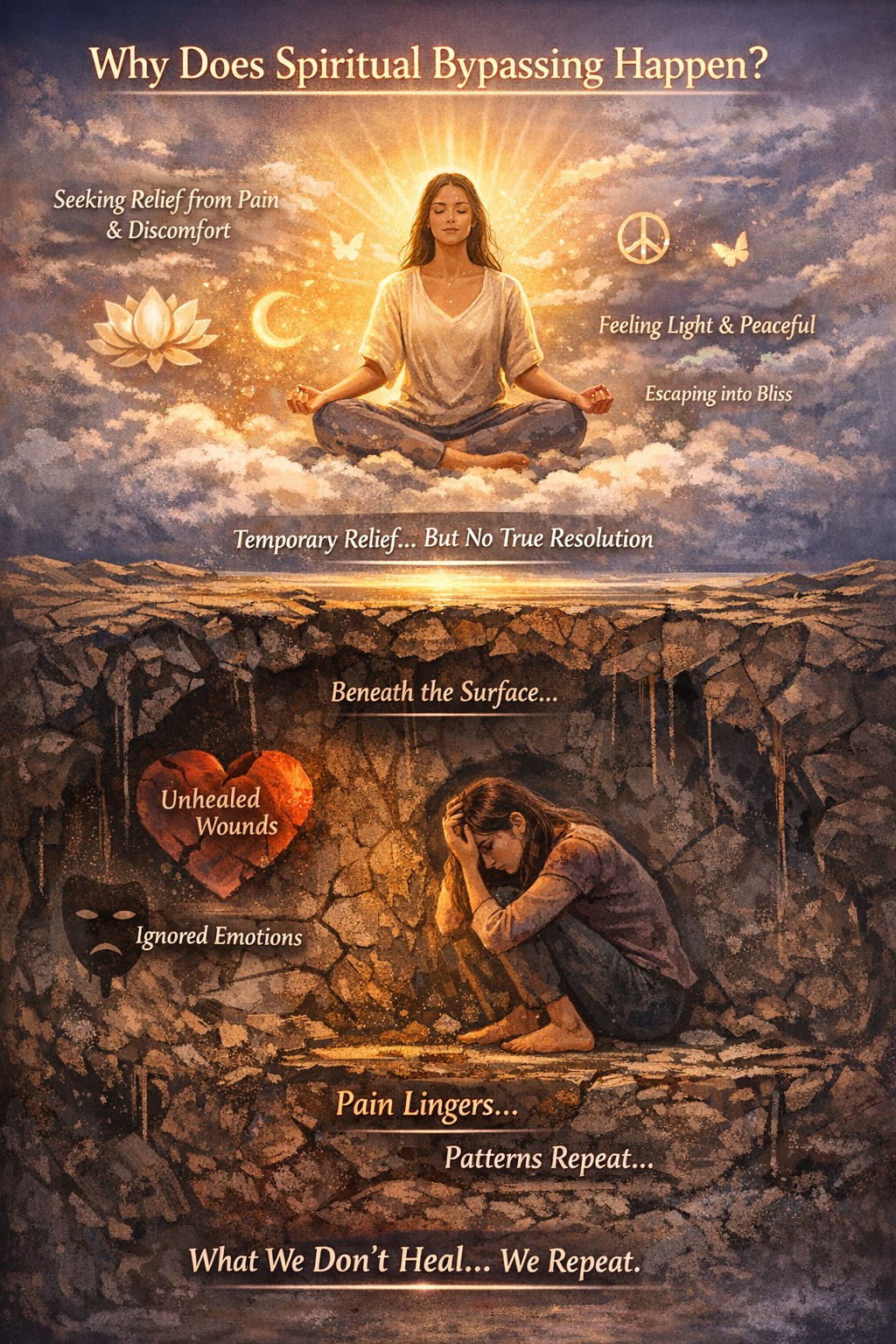
It happens because healing is hard, and our minds are wired to seek relief from pain.
Spiritual practice can offer real, immediate comfort. For instance practicing the art of gratitude before processing our emotional feelings properly. And that comfort is genuine. But there’s an important difference between relief and resolution.
When our practice becomes a way to feel better without facing what’s there, bypassing takes hold. And it can be difficult to spot, because it often looks exactly like progress.
You might feel lighter, more peaceful, more evolved.
But what we do not heal, we repeat. The unresolved wound quietly waits, and resurfaces, often in ways we don’t expect.
Common Signs of Spiritual Bypassing
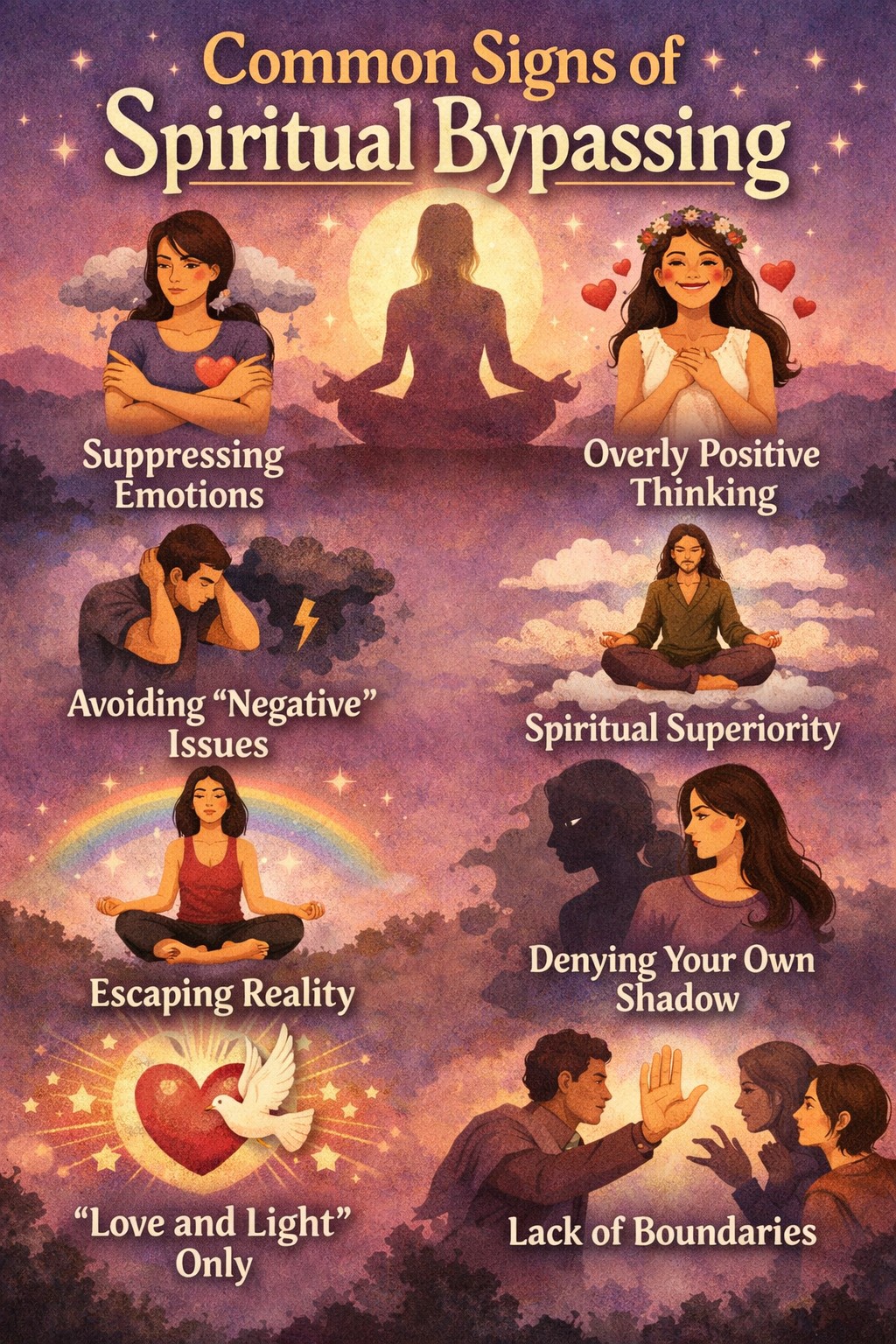
Here are some patterns worth gently reflecting on:
Love and Light Only
Focusing only on positivity while avoiding anything uncomfortable or challenging. Real growth includes both light and shadow, not just the parts that feel good.
Escaping Reality
Using spirituality as a way to disconnect from real-life responsibilities, emotions, or situations instead of engaging with them in a grounded, present way.
Lack of Boundaries
Struggling to say no, over-giving, or allowing others to overstep, all in the name of being kind, compassionate, or “spiritual.”
Denying Your Own Shadow
Your shadow self sometimes referred to as the alter eog are the parts of yourself that feel uncomfortable or difficult to face. True spiritual growth includes meeting all aspects of who you are.
Overly Positive Thinking
Believing you must stay positive at all times, even when it doesn’t reflect your true feelings or experiences.
Toxic Positivity Dressed as Spirituality
Refusing to acknowledge negative emotions because of “good vibes only,” or feeling guilty for being sad, angry, or afraid. Positivity is powerful, but not when it’s used to silence what’s real.
Bypassing Through Meditation or Mindfulness
Meditation and mindfulness are incredible tools, but when used purely to numb out or escape difficult feelings rather than witness them, they become a form of bypassing. These practices are meant to help you become more aware of what you feel, not less.
Premature Forgiveness
Rushing to forgive before truly acknowledging the hurt that was caused, because forgiveness feels more “spiritual” than sitting with pain. Real forgiveness comes after the feeling, not instead of it.
Misusing Karma
Assuming every difficult experience is the result of bad karma can lead to self-blame, hopelessness, and avoidance of real responsibility or compassion for what’s actually happening.
Avoiding Necessary Conflict
Keeping the peace at all costs, dismissing boundaries, or refusing to have important conversations in the name of staying spiritually elevated. If you’re secretly resentful while appearing calm, the wound is still there.
Detachment Disguised as Enlightenment
Feeling emotionally numb or disconnected and calling it being “unattached” or “rising above.” True non-attachment doesn’t mean not feeling, it means not being ruled by feelings.
Anger Left Unexamined
Anger is one of the most commonly bypassed emotions in spiritual circles. Rather than being expressed or explored, it gets labelled “low vibration” and suppressed. But unexpressed anger doesn’t disappear, it goes underground and shapes behaviour in ways we often can’t see.
Spiritual Superiority
Feeling more evolved or enlightened than others, often as a way of protecting the ego from deeper self-examination. True spiritual growth tends to make people more humble, not less.
What Happens When Bypassing Becomes a Long-Term Pattern?
In the short term, spiritual bypassing can genuinely help us cope, and there’s no shame in that.
But when it becomes a long-term strategy, the costs begin to accumulate. Unaddressed emotional wounds can eventually show up as anxiety, codependency, strained relationships, shame, spiritual narcissism, or a subtle but persistent sense that something is still not quite right, no matter how much inner work you feel you’ve done.
Spiritual practice that avoids real healing doesn’t deepen over time. It becomes a beautiful holding pattern, a space that offers comfort, but not transformation.
The good news? Recognising this is the beginning of something much more real.
Where do you go from here?
Healing doesn’t have to be heavy or dramatic. It starts with small, honest questions — the kind your soul has probably been whispering to you for a while.
One of the most powerful places to begin is simply asking: Am I on the right path in life?
Not in a spiralling, anxious way. But gently. Curiously. With a genuine willingness to hear the answer — even if it asks something of you.
Because sometimes, what looks like spiritual bypassing is actually a sign that somewhere along the way, you took a turn away from yourself. And the path back isn’t found by rising above that truth — it’s found by turning towards it.
If you’re ready to explore that question with more depth, our post Am I on the Right Path in Life? walks you through the signs, the patterns, and how to reconnect with your own inner compass — including a beautiful oracle card spread designed to help you hear what your soul is already trying to tell you.
Emotional Healing and Oracle Cards
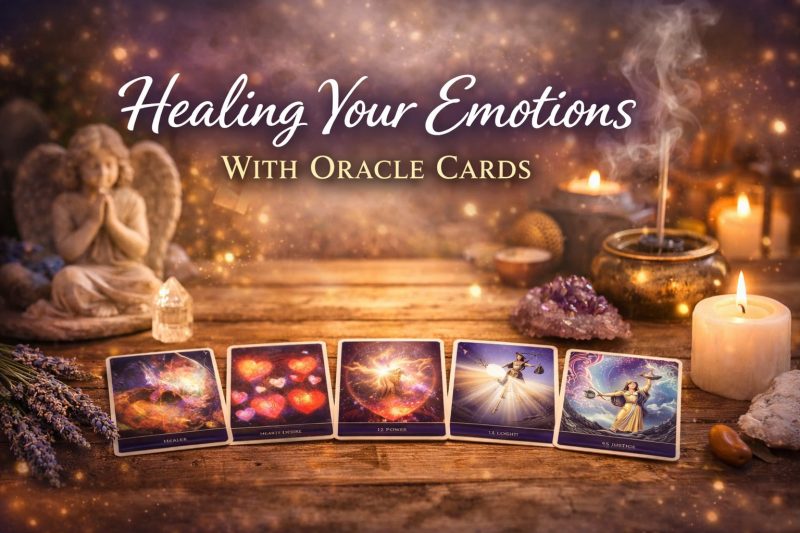
One of the most gentle and surprisingly powerful tools for this kind of honest inner work is oracle cards, not as a way to bypass what you’re feeling, but as a way to meet it.
A well-chosen oracle card pull doesn’t tell you what to feel or hand you a spiritual reframe before you’re ready. It creates a moment of pause. A mirror. A soft invitation to look at what’s actually there.
Used with intention, oracle cards can be a beautiful companion through emotional healing, helping you name what’s hard to say, uncover what’s been pushed down, and find the quiet wisdom that lives beneath the noise.
If you’d like to explore how, our guide to Emotional Healing with Oracle Cards shows you exactly how to use a reading not as an escape from your feelings, but as a doorway into them.
The Difference Between Spiritual Growth and Spiritual Bypassing
True spiritual growth doesn’t ask you to bypass your humanity. It asks you to move through it.
It welcomes the tears alongside the peace. The anger alongside the love. The uncertainty alongside the faith.
Real healing is messy, non-linear, and deeply human. It doesn’t mean staying stuck in pain, it means allowing yourself to feel it fully enough that it can genuinely move through you and release.
Spiritual practice at its best is a companion through that process, not a detour around it.
How to Stay Grounded on Your Spiritual Path
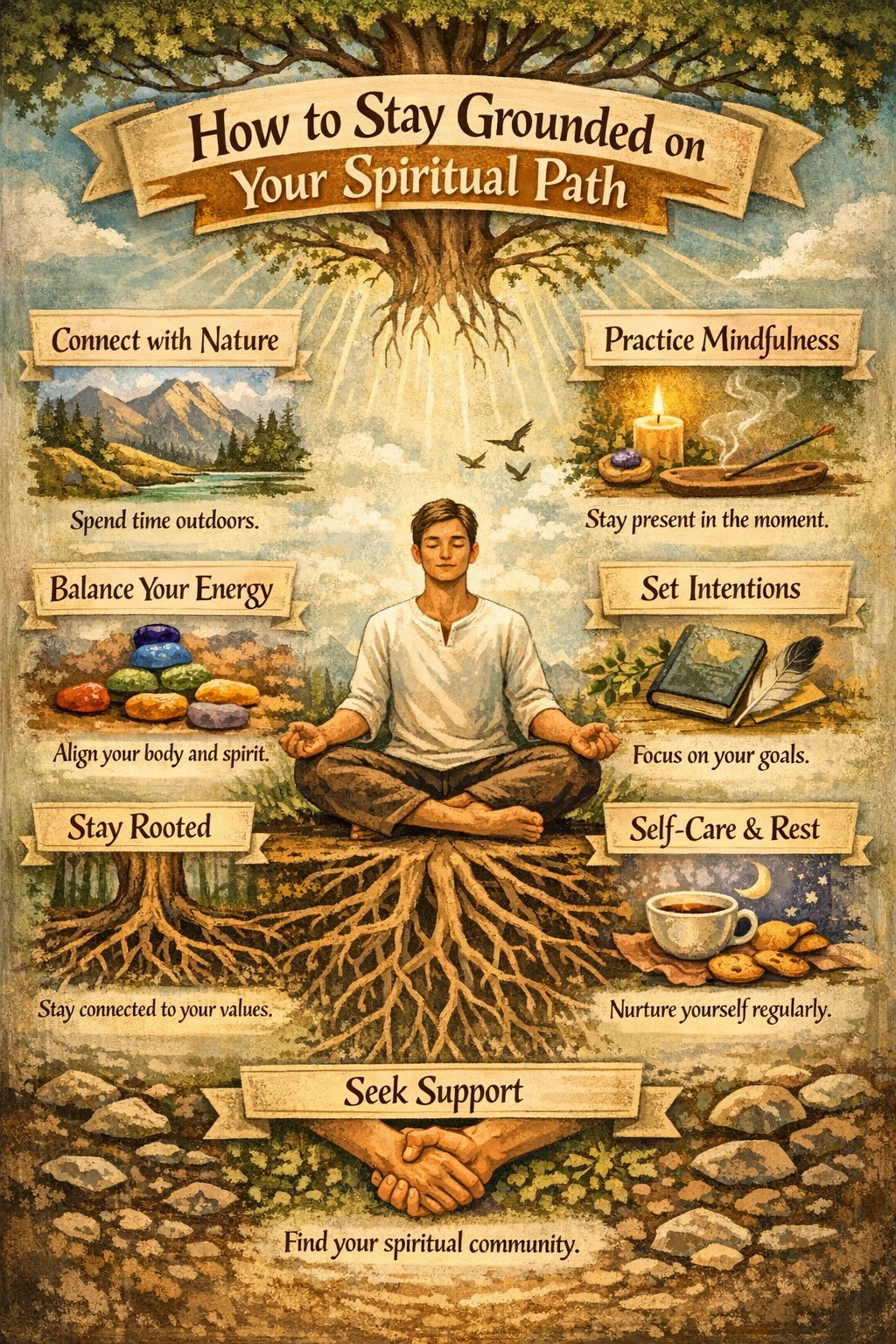
If any of this resonated, here are some gentle ways to ensure your practice supports real healing:
Let yourself feel it first
Before reaching for a spiritual reframe, give yourself permission to simply feel what’s there. Sit with it. Honour it. Emotion is information, and it deserves to be heard before it’s transformed.
Befriend your anger
Rather than labelling anger as unspiritual, get curious about it. What is it protecting? What does it need you to know? Anger, expressed and examined with honesty, is often one of the most powerful doorways to healing.
Work with your shadow, not around it
Your shadow self, the parts of you that feel too painful or too “unspiritual” to look at, holds some of your greatest potential for growth. Oracle cards, journalling, and guided reflection can be beautiful, gentle tools for beginning this work.
Don’t avoid difficult conversations
Real spiritual growth often happens in relationship, in the places where we feel most triggered, most challenged, most human. If you find yourself constantly keeping the peace at your own expense, that’s worth exploring.
Seek support when you need it
Spiritual practice and professional support are not mutually exclusive, they work beautifully together. A therapist, counsellor, or trusted guide can help you process what your spiritual practice uncovers. Join a spiritual community where you can chat with others about how they they process with their feelings.
Check your motivations honestly
Ask yourself: Am I reaching for this practice to help me heal , or to help me feel better without healing? There’s no judgment in the answer. Just honesty.
Trust that facing it IS the spiritual path
The bravest, most spiritually aligned thing you can do is turn towards what’s difficult, gently, with compassion, rather than away from it.
Want Support On Your Spiritual Journey?

If you’re navigating your spiritual journey and looking for guidance, clarity, or simply a moment to reconnect with yourself, you’re in the right place.
We’ve created a collection of free resources designed to support you wherever you are—whether you’re just beginning or deepening your path.
Pick-a-Card Readings
Take a quiet moment, tune into your intuition, and choose the message you feel drawn to. These readings are designed to offer insight, reassurance, and gentle direction when you need it most.
Shadow Work Articles & Quizzes
Explore the deeper layers of your personal growth through supportive, easy-to-follow articles and interactive quizzes. These are here to help you understand your patterns, reconnect with yourself, and grow at your own pace.
Daily Messages from Spirit
Receive uplifting, intuitive guidance to help you stay aligned and supported throughout your day. Sometimes, the message you need finds you at exactly the right moment.
Free Tarot Readings
Access simple, insightful tarot readings designed to bring clarity to your current situation. Whether you’re seeking answers or just a fresh perspective, these readings are here to guide you.
And So Much More…
From spiritual guidance to self-discovery tools, everything we create is designed with one intention, to support you in feeling more connected, grounded, and empowered on your journey.
Take what resonates, leave what doesn’t, and trust that you’re being guided in your own way.
Private Readings
Book a private reading with Anne-Marie or one of our trusted psychics a safe, warm, grounded space to help you find clarity and move forward with confidence.
Frequently Asked Questions About Spiritual Bypassing
What is spiritual bypassing?
It is when someone uses spiritual beliefs or practices to avoid dealing with difficult emotions, unresolved trauma, or real-life challenges. Instead of processing what’s happening, it’s pushed aside in favour of staying “positive” or “high vibe.”
What are the signs you are avoiding your emotions spiritually
Common signs of bypassing include toxic positivity, avoiding negative emotions, premature forgiveness, lack of boundaries, emotional numbness, spiritual superiority, and using practices like meditation to escape rather than process feelings.
Healthy vs unhealthy spiritual practices
Spiritual bypassing can be limiting because it prevents real healing. While spirituality is meant to support growth, bypassing emotions can keep wounds hidden rather than resolved, often leading to repeated patterns or emotional overwhelm later on.
What causes spiritual bypassing?
Spiritual emotional avoidance often comes from a desire to feel safe, in control, or “better.” It can also be influenced by spiritual teachings that overemphasise positivity while unintentionally discouraging emotional honesty.
Can you practice spirituality without bypassing?
Yes, healthy spirituality includes emotional awareness, self-reflection, and honesty. It allows space for both light and shadow, recognising that growth comes from fully experiencing and integrating all emotions.
What is toxic positivity in spirituality?
Toxic positivity in spirituality is the belief that you must stay positive at all times, even when you’re struggling. It can lead to suppressing real emotions and feeling guilty for experiencing natural human responses like sadness or anger.
Why is shadow work important in spirituality?
Shadow work helps you explore and integrate the parts of yourself that are often ignored or rejected. Without it, personal growth can become unbalanced, leading to patterns of avoidance rather than true transformation.
What is the difference between detachment and avoidance?
Detachment means not being controlled by emotions, while still allowing yourself to feel them. Avoidance, on the other hand, is pushing emotions away entirely, which often leads to disconnection and unresolved issues.
How do I stop spiritual bypassing?
Start by allowing yourself to feel your emotions without judgement. Practice self-awareness, set healthy boundaries, and use spiritual tools to support your healing rather than escape it. Growth comes from presence, not avoidance.
A Final Word
Spiritual bypassing isn’t a flaw or a failure. It’s a deeply human response to pain, and recognising it in yourself is already an act of real courage.
Your path doesn’t ask you to be perfectly healed, perfectly positive, or perfectly anything.
It simply asks you to be honest. To show up. To keep going, even through the hard parts.
Especially through the hard parts.
Because that’s where the real growth lives.