If you’ve ever wondered “Why am I triggered?” when your reaction felt bigger than the moment, you’re not alone. Millions of people experience emotional triggers daily—and most don’t understand why they happen or how to stop the cycle.
Emotional triggers are one of the biggest blocks to accessing your intuition, creating peaceful relationships, and living authentically. Yet most people treat triggers as a personal flaw rather than what they really are: signals that something within you needs healing.
If you’re searching “why am I triggered,” it’s usually because your reactions feel overwhelming, confusing, or out of your control.
This complete guide breaks down why am I triggered, the 9 root causes behind your emotional reactions, and practical solutions you can use immediately to calm your nervous system and reclaim your inner peace.
Whether you’re constantly triggered by conflict, rejection, feeling controlled, or overwhelm, this guide will help you understand the real reason why you are triggered by specific situations, and more importantly, how to respond with awareness instead of reacting automatically.
By the end of this article, you’ll understand:
- The 9 most common root causes of emotional triggers
- Why your reaction feels bigger than the moment (and it’s not because you’re “too sensitive”)
- How triggers block your psychic gifts and intuition
- Practical, immediate solutions to use when you’re triggered
- The connection between your triggers and your shadow self
- How to transform triggers from obstacles into opportunities for growth
Let’s get started!
Discover why you react the way you do, and how understanding your triggers can transform your relationships, intuition, and inner peace.
What Does “Triggered” Actually Mean? (Understanding Why Am I Triggered)
At its core, a trigger is an emotional reaction that feels stronger than what’s happening in the present moment.
Why am I overreacting in the first place? It’s when:
- A comment feels like a personal attack
- Silence feels like rejection
- A situation feels more intense than it logically should
- You overreact and wonder why
This happens because your mind and body aren’t just responding to now—they’re responding to something familiar from your past.
A trigger is a signal, not a flaw.
It means something within you is asking to be seen, understood, or healed.
Understanding why are you triggered by certain situations is the first step to changing your automatic reactions and reclaiming your peace. The good news? Every trigger carries information about what needs healing.
Why Your Reaction Feels Bigger Than the Moment (Why Am I Triggered So Intensely?)
When you feel triggered, you’re not just reacting to what’s happening right now.
You’re reacting to all the similar moments that came before it.
So why am I triggered by small things? Because your reaction carries emotional weight from multiple past experiences.
For example:
- Someone raises their voice → You feel a spike of fear (because raised voices remind you of conflict or yelling from the past)
- A friend doesn’t text back → You feel panic (because silence reminds you of being ignored or abandoned)
- You’re corrected at work → You feel shame (because correction reminds you of being told you’re not good enough)
In each case, your reaction carries the emotional weight of multiple past experiences, all layered together.
This is why the feeling can seem so intense, and why it can catch you off guard.
But here’s the important part: this intensity is information, not overreaction.
Your system is trying to protect you. It’s saying: “This feels like something that hurt before. I’m going to react strongly to keep you safe.”
Now you understand why you are overreacting so disproportionately to what’s actually happening. Once you understand what’s underneath the reaction and what it connects to, what it reminds you of—you can start to gently untangle it.
The 9 Root Causes of Emotional Triggers
Why am I triggered by specific things? Triggers rarely appear randomly. They’re usually connected to one or more of these core wounds or unmet needs.
Understanding these nine root causes will help you identify why you are triggered in your specific situations and begin to work with the deeper patterns beneath your reactions.
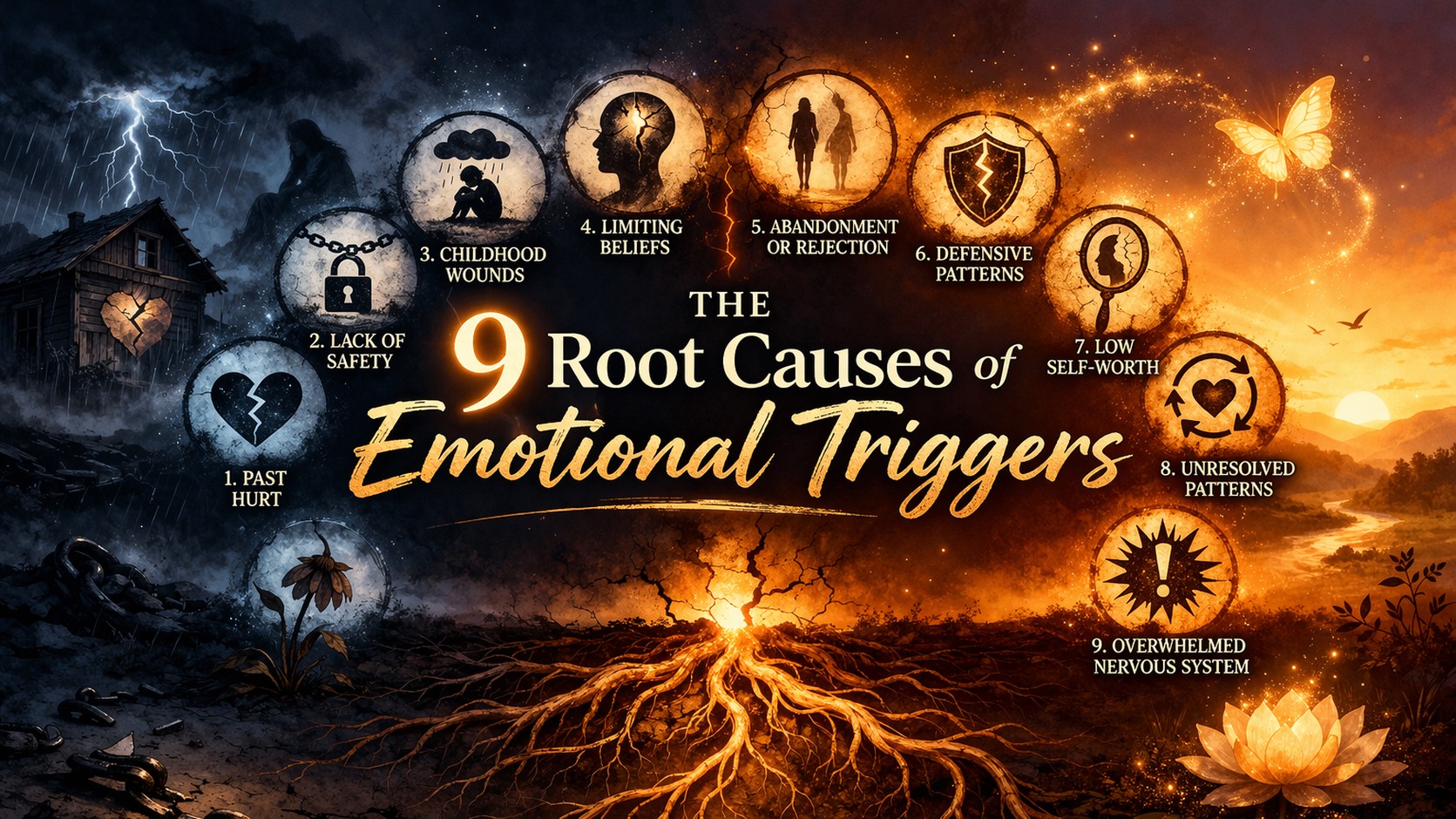
Triggers can show up in many forms, and often in ways that feel very personal. Let’s explore each one:
1. Feeling Controlled or Micromanaged
The trigger: Someone makes decisions for you, tells you what to do, or questions your choices.
The root: Past experiences where you weren’t trusted, had your autonomy taken away, or felt powerless.
Example: A manager gives you unsolicited advice, and you feel a rush of anger—not because the advice is bad, but because it touches an old wound about not being trusted.
2. Feeling Rejected or Excluded
The trigger: Being left out, ignored, or feeling abandoned (even subtly).
The root: Past experiences of rejection, abandonment, or not belonging.
Example: A friend doesn’t invite you to something, and you feel disproportionate hurt—because exclusion touches your fear of not being wanted.
3. Being Disrespected or Discounted
The trigger: Your opinions, time, or presence are undervalued or dismissed.
The root: Past experiences where you weren’t taken seriously or your worth was questioned.
Example: Someone interrupts you, and you feel a flash of shame—because it triggers an old belief that your voice doesn’t matter.
4. Traumatic Memories or Anniversaries
The trigger: Reminders of past pain, loss, abuse, or significant events.
The root: Unhealed trauma or grief.
Example: A date, smell, sound, or situation mirrors a painful past event, and suddenly you’re flooded with the emotions of that time.
5. Unfairness or Injustice
The trigger: Witnessing or experiencing blame, unfair treatment, or broken promises.
The root: Past experiences where you were blamed unfairly or treated unjustly.
Example: Someone gets credit for your work, and you feel rage—because it touches an old wound about not being valued or recognized.
6. Feeling Vulnerable or Exposed
The trigger: Situations where you feel unsafe, embarrassed, or unprotected.
The root: Past experiences of shame, exposure, or being hurt when vulnerable.
Example: Someone questions your spiritual beliefs, and you feel defensive—because sharing something personal triggered a fear of being judged or mocked.
7. Conflict or Aggression
The trigger: Raised voices, tension, confrontational behaviour, or hostility.
The root: Past experiences with conflict, yelling, or aggressive behaviour.
Example: A heated discussion makes your body tense and your heart race, because raised voices remind your system of danger or conflict from the past.
8. High Stress or Overwhelm
The trigger: Pressure from deadlines, responsibilities, expectations, or major life changes.
The root: Past experiences of feeling unable to cope or failing under pressure.
Example: Multiple demands come at once, and you feel paralyzed—because overwhelm triggers an old belief that you can’t handle it.
9. Physical Discomfort
The trigger: Being tired, hungry, in pain, or unwell.
The root: Physical states lower your emotional resilience and activate stored tension.
Example: When you’re exhausted, small frustrations feel enormous—because your nervous system is already depleted and more reactive.
Do any of these resonate with you?
If so, it doesn’t mean something is wrong with you. It means something within you has been hurt, and your system learned to protect itself.
How Triggers Block Your Intuition (And Why Am I Triggered Affects Your Psychic Gifts)
Here’s something crucial that most people don’t realize: When you’re triggered, you cannot access your intuition clearly.
If you’ve ever wondered “why am I triggered and suddenly can’t hear my intuition?” — this section explains exactly what’s happening.
Your intuitive gifts—your psychic awareness, inner knowing, spiritual guidance—require a calm, grounded nervous system to function.
Learning to listen to your intuition is one of the most powerful gifts you can develop. But triggers are one of the biggest blocks to hearing that inner voice clearly.
When you’re triggered, your system goes into protective mode. In that state:
- You react instead of reflect
- You defend instead of understand
- You focus on the problem instead of the deeper message
- You lose access to your intuitive clarity
This is why:
- During conflict, you can’t hear what someone is really saying
- When anxious, you second-guess your inner guidance
- During overwhelm, you feel disconnected from Spirit
- In fear, your psychic abilities seem to disappear
But they haven’t disappeared. They’re temporarily inaccessible because your system prioritizes survival over clarity.
Once you calm your nervous system and feel safe again, your intuitive awareness naturally returns.
Understanding your triggers is essential to developing your psychic gifts.
Because every time you work with a trigger and ask “why am I triggered by this?”, you’re clearing the block that’s been preventing you from accessing your full intuitive potential. This is why shadow work and trigger awareness are so important for anyone developing their psychic abilities.
Your Nervous System & the Fight-or-Flight Response (Why Am I Triggered Physically?)
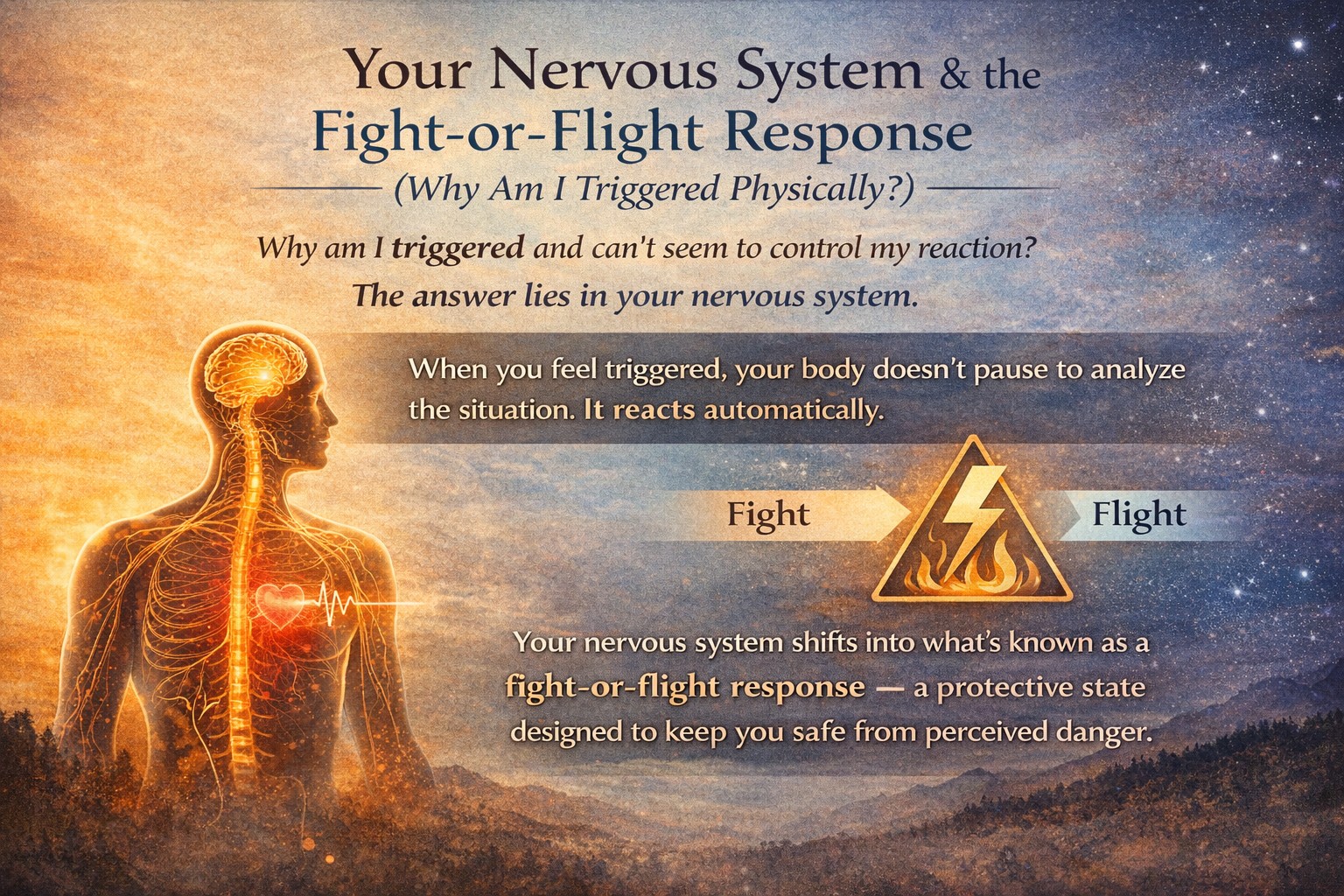
Why am I triggered and can’t seem to control my reaction? The answer lies in your nervous system.
When you feel triggered, your body doesn’t pause to analyze the situation. It reacts automatically.
Your nervous system shifts into what’s known as a fight-or-flight response—a protective state designed to keep you safe from perceived danger.
This is a biological response, not a character flaw. Understanding this is key to answering “why am I triggered so intensely?”
In this activated state:
- Your heart rate increases
- Your body becomes tense
- Your focus narrows (you see only the threat)
- Your reactions become faster and more instinctive
- Your rational mind quiets down
- Your emotional reactivity increases
This response isn’t a sign that something is wrong. It’s a sign that your system believes something is unsafe.
The challenge:
Your nervous system cannot always tell the difference between past danger and present reality.
So even if the current situation isn’t truly threatening, your body can react as if it is.
This is why:
- A criticism at work can feel like a personal attack
- A delayed text can feel like abandonment
- A disagreement can feel like rejection
- A raised voice can feel like danger
Your system is trying to protect you based on past learning, not current reality.
A note on energy protection: Sometimes triggers activate because our energetic boundaries are weak or compromised. If you find yourself constantly triggered by others’ energy or emotions, spiritual protection practices can help. When your energy is protected, you’re less likely to absorb others’ emotions and feel triggered by them. This is especially important for empaths and highly sensitive people.
Calm Your System Right Now: Free Tools to Help You
Before you move forward, know this: you don’t have to work through this alone.
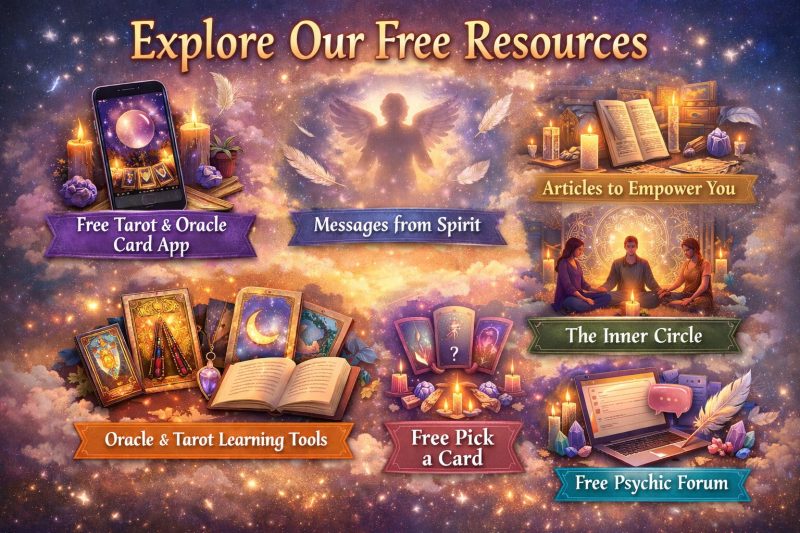
6th Sense Connection offers a suite of free resources designed to help you calm your nervous system and reconnect with your intuition in the moments you need it most.
Why Use Free Resources When You’re Triggered?
Daily Messages from Spirit – Get gentle, grounded guidance that reminds you you’re not alone and you’re being supported
Pick-a-Card Readings – Receive intuitive clarity about what your triggers are trying to show you (no pressure, just insight)
Psychic Quizzes – Explore your intuitive strengths and discover the gifts you already possess
Free Tarot Readings – Access symbolic wisdom that helps you see your situation from a higher perspective
These tools serve a powerful purpose: they ground you, remind you of your inner knowing, and help you move from reactivity back into awareness.
Explore All Free Resources Here →
The benefit? When you’re triggered, your intuition feels blocked. These free tools help you reconnect with your inner guidance—the very thing triggers suppress. Even 5 minutes with a pick-a-card reading or a daily message can shift your nervous system from “I’m in danger” to “I’m supported.”
From Reaction to Awareness: Where Your Power Lives
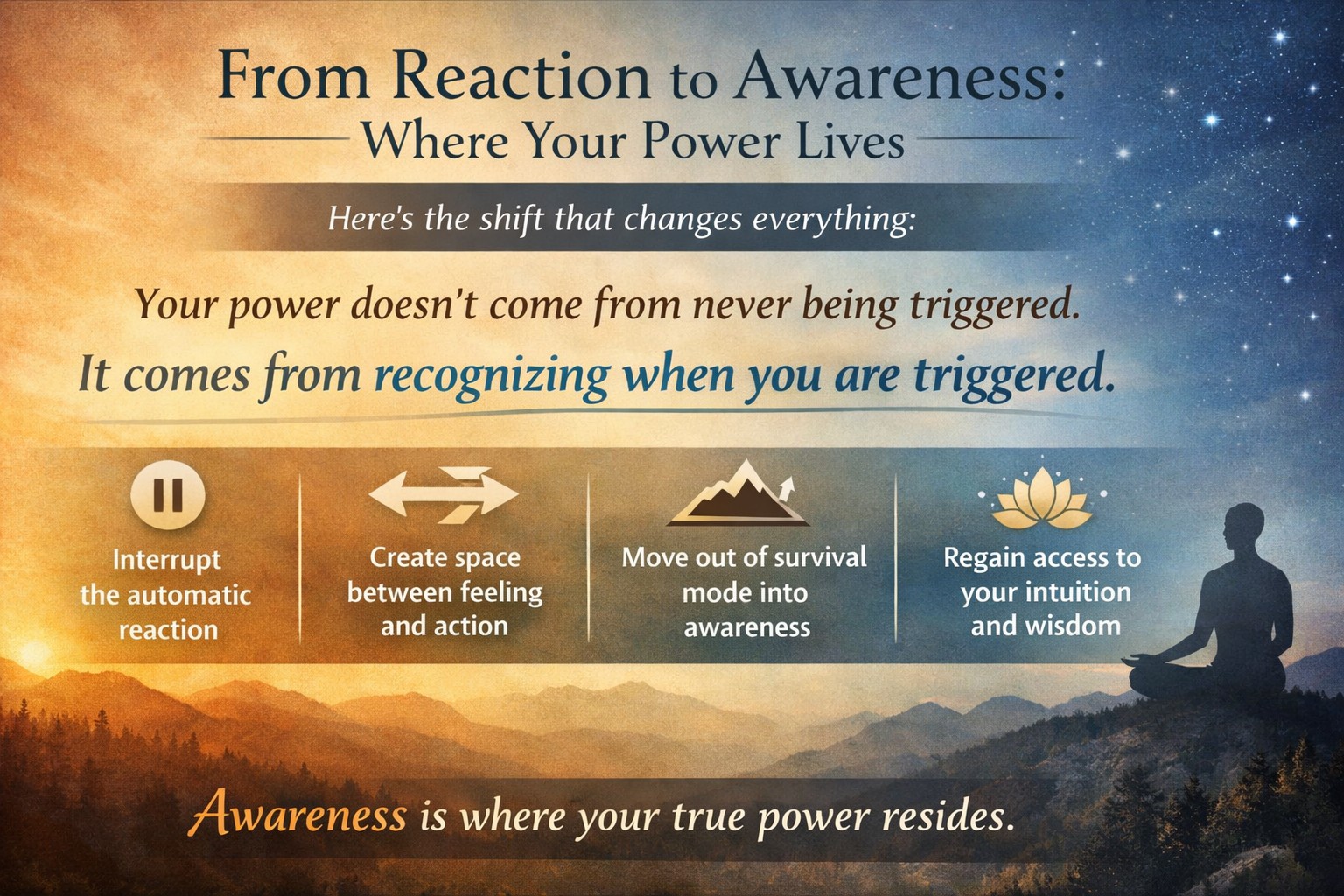
Here’s the shift that changes everything:
Your power doesn’t come from never being triggered.
It comes from recognizing when you are triggered.
Because the moment you become aware that you’re in a triggered state:
- You interrupt the automatic reaction
- You create space between feeling and action
- You begin to move out of survival mode and back into awareness
- You regain access to your intuition and wisdom
From that place of awareness, everything changes.
You can:
- Hear your intuition again
- Understand what the trigger is showing you
- Choose how you respond instead of reacting automatically
- Make decisions from wisdom, not fear
- Connect with others authentically
This is the shift from reaction to awareness.
And it’s where your true power lives.
Practical Solutions: What to Do When You’re Triggered (Stop Reacting, Start Responding)
Why am I triggered and how do I stop the reaction in the moment? Here’s the truth: you can’t prevent triggers from happening, but you can absolutely change how you respond to them.
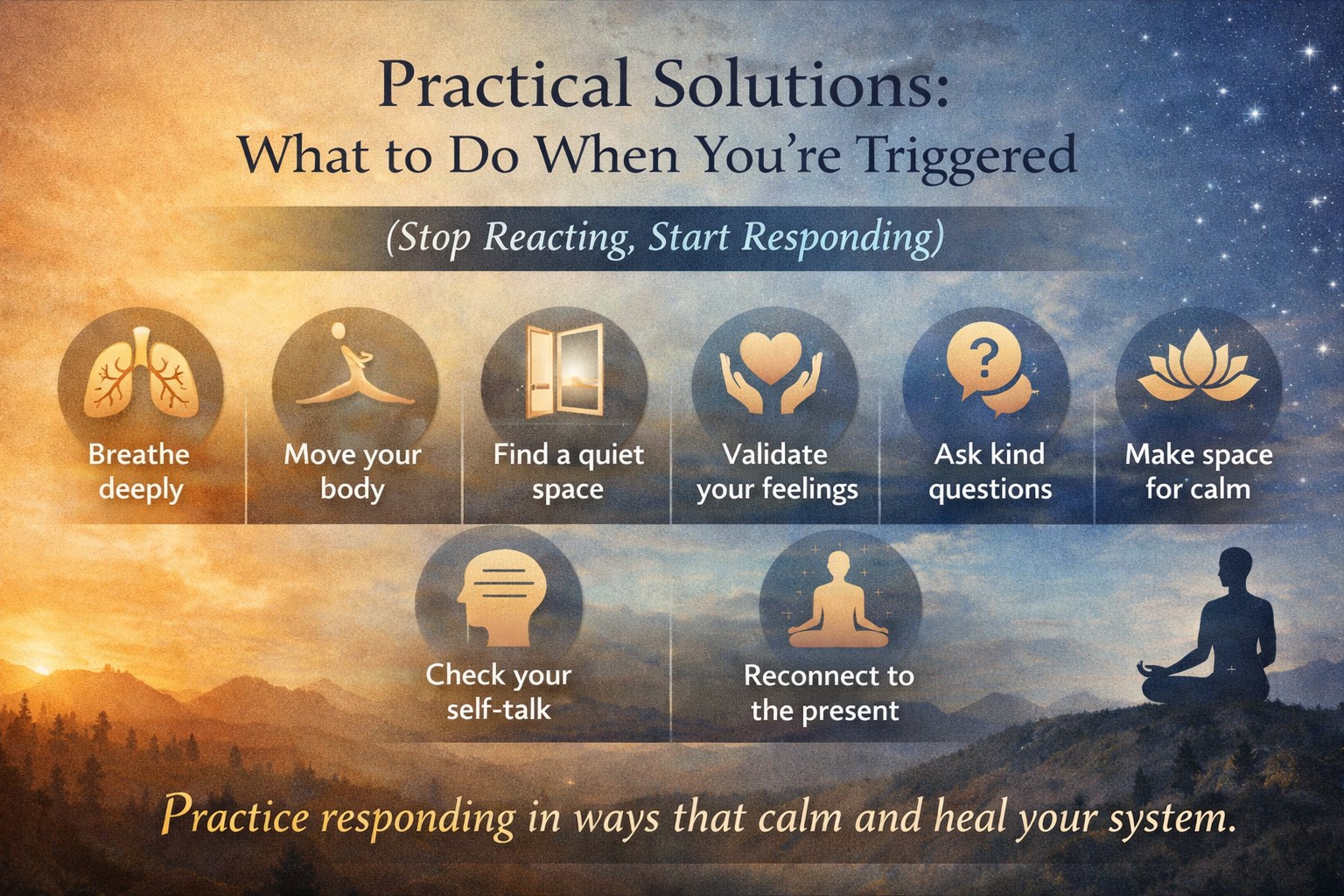
When you notice you’re triggered, these step-by-step solutions will help you move from automatic reaction back into conscious awareness:
Step 1: Name It (In the Moment)
The first step is recognizing that you’re triggered, not just reacting.
Pause and ask yourself: “Am I triggered right now?”
Simply naming it creates distance between you and the reaction. It tells your nervous system: “This is a trigger. This is familiar. I’m safe now.”
Step 2: Pause Before You Respond
Don’t act on the reaction immediately.
Give yourself 10 seconds, 10 minutes, or even 10 hours if needed.
Create space between feeling and action.
In that space, you regain choice.
Step 3: Calm Your Nervous System
Your body is in protective mode. Help it feel safe again:
- Take slow, deep breaths (5 second inhale, 5 second exhale—this signals safety to your nervous system)
- Ground yourself (feel your feet on the ground, notice 5 things you can see)
- Move your body (shake it out, walk, stretch—discharge the activation)
- Cool your face (splash cold water, which calms the nervous system)
Step 4: Ask the Deeper Question
Once you’ve calmed down a bit, ask yourself:
“What is this trigger trying to show me? What part of me feels unsafe right now?”
Not: “Why am I being so dramatic?” But: “What does this remind me of? What need isn’t being met?”
Note: As you develop this awareness, you’re cultivating the receptive, intuitive energy that allows you to hear your inner wisdom. Accessing your divine feminine energy — the part of you that listens, feels, and knows — is essential to this process. This is different from masculine energy (which acts and does). Both are necessary, and triggers often block the receptive feminine wisdom we need.
And sometimes, these emotional surges aren’t just reactions — they’re activations.
You may be moving through a spiritual awakening.
During a spiritual awakening, old wounds, patterns, and unresolved emotions rise to the surface — not to overwhelm you, but to be seen, understood, and released. Triggers can become more intense during this time because your awareness is expanding, and what was once buried is now ready to heal.
If this feels familiar, it may help to explore the deeper signs of a spiritual awakening and how to navigate them with more ease and self-trust.
Step 5: Get Curious, Not Critical
Approach your trigger with curiosity, not judgment.
- “I wonder what this is about…”
- “I’m noticing I’m triggered. That’s interesting.”
- “What past experience does this connect to?”
Curiosity keeps your higher brain engaged. Judgment activates more reactivity.
Step 6: Reflect or Process
Once you’re calm, you can reflect:
- Journal: Write about what triggered you and what it reminds you of
- Talk to someone trusted: Share what happened and what you’re feeling
- Use intuitive tools: Try a pick-a-card reading to understand what your trigger is showing you
- Meditate: Sit with the feeling and notice what comes up without trying to fix it
Step 7: Choose Your Response
From this grounded, aware place, you now have a choice.
You can:
- Have the conversation differently
- Set a boundary you couldn’t before
- Let go of something you were holding
- Respond with compassion instead of defense
- Make a different choice than you would have in reaction
This is where growth happens.
The Shadow Self Connection
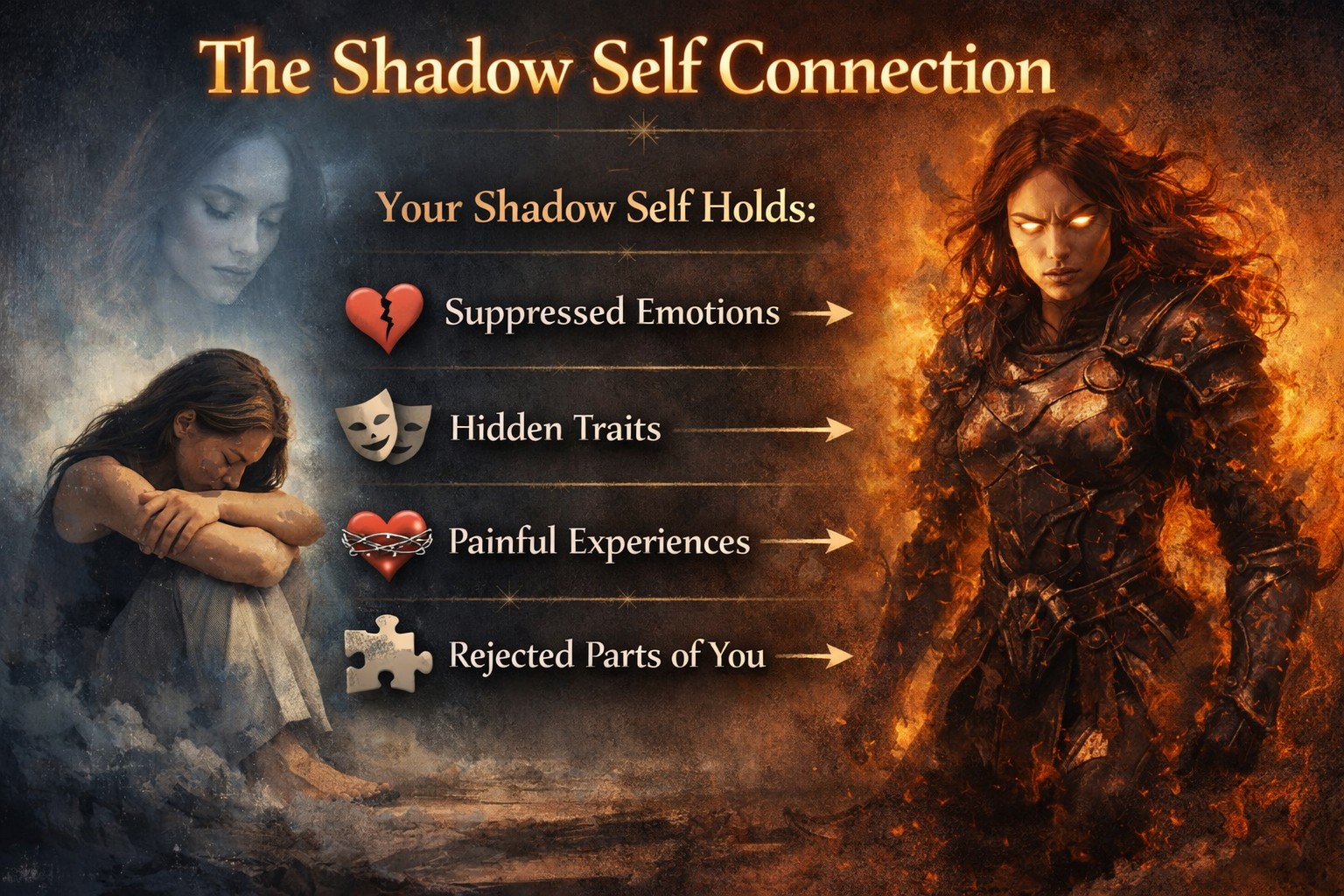
Your triggers don’t just appear randomly. They’re deeply connected to your shadow self.
Your shadow self is the part of you that holds:
- Emotions you’ve learned to suppress
- Traits you were taught to hide
- Experiences that hurt you
- Parts of yourself you’ve rejected
When something triggers you, your shadow is being activated.
What’s happening:
Your trigger touches an old wound or unmet need. Your shadow (the protective part of you) wakes up and says: “Wait, this feels dangerous. I remember this. Let me protect you.”
Your ego (the part that wants to feel safe and in control) reacts defensively.
Together, they create the triggered response.
Here’s the empowering part:
When you understand what your shadow is trying to protect, your trigger becomes your guide instead of your enemy.
Your shadow isn’t here to sabotage you. It’s here to help you.
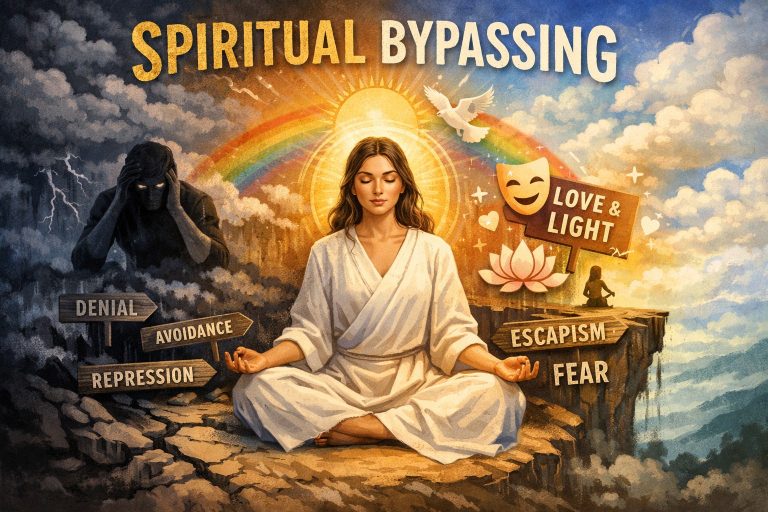
Important note: Sometimes when working with triggers, people fall into spiritual bypassing which when you use spiritual practices to avoid the deeper healing work. Learn about spiritual bypassing here so you can recognize if you’re using spirituality to skip over necessary processing.
It’s showing you:
- Where you need stronger boundaries
- Where you need compassion for yourself
- Where you’re ready to grow
- What part of you is asking for understanding
Ready to Go Deeper?
If you want to understand the deeper root of your triggers, shadow work is the path.
Read: Shadow Self Meaning: What It Is, Why It Appears, and How to Work With It – Understand what your shadow is and why it exists
Read: How to Work With Your Shadow Self in 5 Easy Practical Steps – Learn practical techniques to work with your shadow and reduce reactivity
Frequently Asked Questions About Why Am I Triggered
If you’re still asking “why you get triggered?” after reading this article, these FAQs may have the answer you’re looking for.
Why am I triggered so easily?
You may feel triggered easily because your emotional responses are connected to past experiences, not just the present moment. Understanding why you are triggered by specific things helps you see the pattern. When something reminds your mind or body of a previous hurt, your reaction can feel stronger than the situation itself. Additionally, if you’re stressed, tired, or depleted, your emotional resilience is lower, making you more reactive overall.
Why do I go into fight-or-flight when I feel triggered?
When you feel triggered, your nervous system interprets the situation as a threat based on past experiences. This activates a protective response, causing your body to react quickly—even if the current situation isn’t actually dangerous. Your system is trying to protect you based on what it learned from past events.
Why do I overreact to small things?
What feels like overreacting is often your system responding to multiple past experiences at once. When similar situations have caused pain before, your reaction carries the emotional weight of all those moments, not just the current one. That’s why a small comment can trigger a big response—it’s activating layers of past hurt.
What are emotional triggers?
Emotional triggers are reactions that occur when something in the present moment activates a past memory, belief, or unresolved feeling. They happen automatically and can feel intense or difficult to control. Triggers are your system’s way of protecting you based on what it learned from past experiences.
How do I stop being triggered?
Instead of trying to stop triggers completely, it’s more helpful to understand them. When you recognize what a trigger is connected to, you can begin to respond differently over time, reducing its intensity and impact. You can’t eliminate triggers, but you can change your relationship with them.
Is being triggered a bad thing?
Being triggered is not a bad thing—it’s a signal. Your mind and body are telling you that something needs attention, understanding, or healing. When approached with awareness and curiosity, triggers can become a powerful tool for personal growth and deeper self-understanding.
What is spiritual bypassing and could it be affecting my triggers?
Spiritual bypassing occurs when someone uses spiritual concepts, practices, or beliefs to avoid dealing with difficult emotions, unresolved trauma, or psychological issues. Rather than facing challenging feelings directly, the person may use spirituality as a way to transcend, minimize, or sidestep the emotional work that’s actually needed.
How does being triggered affect my intuition?
When you’re triggered, your nervous system is in protective mode, which makes it difficult to access your intuitive gifts. Your psychic awareness, inner knowing, and spiritual clarity require a calm, grounded state. Once you calm your system and feel safe again, your intuitive abilities naturally return. Understanding and working with your triggers is essential to developing your psychic gifts.
Can shadow work help with triggers?
Yes. Shadow work helps you understand the deeper patterns and past wounds behind your triggers. By exploring the parts of yourself that feel hurt, rejected, or unseen, you can begin to reduce emotional reactivity. Over time, your triggers lose their power, and you respond more consciously and intuitively.
How long does it take to stop being triggered?
This varies for everyone. Awareness can shift quickly—you might notice a difference in how you respond within days or weeks. But true integration takes time. Each time you respond differently to a trigger, you’re rewiring your nervous system. This is an ongoing process, but consistent awareness and work with your triggers will create lasting change.
Your Next Steps
You now understand why you get triggered and how it blocks your intuition.
The question is: what will you do with this awareness?
You have options:
Option 1: Start Working With Your Triggers
Use the practical solutions in this article to calm your nervous system and respond with awareness instead of reaction. Notice what triggers you and get curious about what they’re showing you.
Option 2: Explore Your Shadow Self
If you want to go deeper and understand the root of your triggers, explore our shadow self guides:
- Shadow Self Meaning – Foundational understanding
- How to Work With Your Shadow Self – Practical techniques
- Shadow Self Mastery – Advanced integration
Option 3: Get Clarity on Your Path
If triggers have left you feeling disconnected from your path, explore whether you’re on the right path and reconnect with your spiritual direction. Sometimes triggers show us we’re out of alignment with our true purpose.
Option 4: Seek Guidance
If triggers are significantly impacting your life, relationships, or wellbeing, consider working with a therapist, shadow work coach, or psychic reader who can offer personalized support.
Option 4: Connect With Your Intuition
Try a free pick-a-card reading to get intuitive guidance about what your triggers are trying to show you.
The Truth About Triggers (Why Am I Triggered Matters)
Why am I triggered is a question millions ask every single day. And now you have a comprehensive answer.
Your triggers aren’t your enemy. They’re messengers carrying important information.
Every trigger carries information:
- A boundary that hasn’t been honoured
- A belief that no longer supports you
- A wound that needs compassion
- A part of you that wants to be heard
When you stop fighting your triggers and start listening to them, they transform from obstacles into opportunities for growth.
And when you clear these blocks, something remarkable happens:
Your intuition opens. Your inner knowing strengthens. Your psychic gifts flourish.
Because triggers block intuition, and healing triggers unlocks it.